

Basilica of Santa Cristina
Last updated on October 8, 2026Why visit Basilica of Santa Cristina
In 1263 a priest who doubted the real presence was saying mass over the martyr's tomb here when the host bled onto the corporal. The pope was at Orvieto, twenty kilometres away; within a year he had instituted the feast of Corpus Domini for the universal Church and commissioned Thomas Aquinas to write its office. The altar it happened on is still in the catacomb, inside a Renaissance enclosure. Downstairs, in a crypt built after 1880, a late-imperial sarcophagus has a hole punched in its back, and through the hole you can see the Roman cinerary urn that held the bones.
Visit if you:
- want a site where an event in one building changed the calendar of the whole Western Church
- are interested in Florentine Renaissance architecture turning up in a small lake town -- the façade is a Buglioni design derived from the 1490 Santa Maria del Fiore competition
- want a real catacomb rather than a crypt: a late-third-century Christian cemetery with a tenth-century underground basilica inside it
- like the forensic side of relics. The urn here was opened, and what was in it was recorded
Skip it if you:
- cannot do stairs: the catacomb is reached by a double flight and the visit is underground throughout
- want to photograph it. No photography is permitted in the catacombs at all
- are arriving alone outside the scheduled visits -- the catacomb tour runs only once six paying visitors have gathered
- are expecting a rich medieval interior: a 1925-1930 restoration stripped the nave back and lost a great deal
Quick facts
- Type: Church, Sacred Place
- Local name: Basilica di Santa Cristina (vedi la pagina italiana)
- Visitor access: Open to visitors
- Architectural style: Florentine Renaissance facade, Romanesque church
Visit responsibly
The photography ban in the catacombs at Santa Cristina is absolute and is not the parish being difficult. Authorisation runs through the Pontificia Commissione di Archeologia Sacra, requires a written request twenty days ahead, costs 160 euros a day and comes with a fossore in attendance throughout. A phone raised below ground here is a decision to ignore a procedure that exists because flash and traffic damage painted plaster.
What is at risk is specific. The barrel vault over the tomb carries frescoes probably of the sixteenth century and a Saint Peter from the second half of the fifteenth, in a confined underground space where every visitor's breath and body heat are part of the environment. The guided route exists partly to keep groups moving; on busy days the sanctuary runs two at once in opposite directions rather than letting one crowd build up.
This is also a cemetery that was robbed. The hole in the back of the sarcophagus was made by people after the contents, and what survived -- the small bones of a child under fourteen, a silver coin of King Berengar -- survived because the urn inside was missed. The tomb was only recovered archaeologically in 1880.
And it is a working parish and a sanctuary, with Mass several times a day in both seasons. The basilica's closure from 12:15 to 15:30 is part of how a parish with a monument in its basement manages both.
The 1925-1930 restoration is the cautionary tale on site: a campaign undertaken in good faith to recover original forms, which demolished and rebuilt arbitrarily and lost elements of fundamental importance. The sanctuary says so about its own church.
Where it is
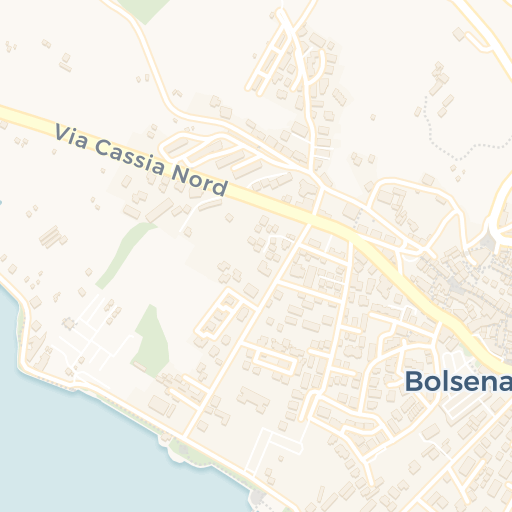
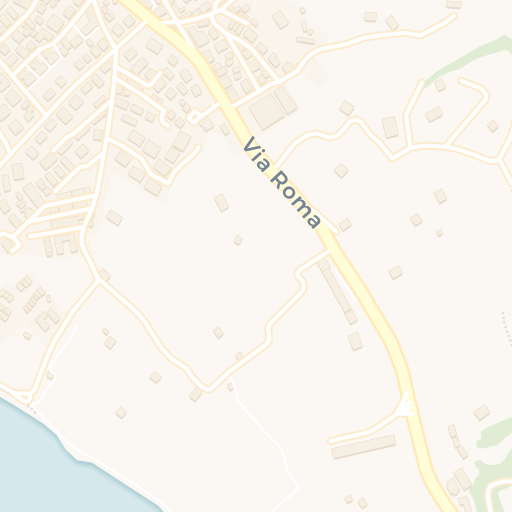
Get directions Open in Apple Maps
© OpenStreetMap contributors · © CARTO · 42.6434, 11.9895
Plan your visit
The catacomb ticket at Santa Cristina is 5 euros, 3 for anyone up to 16 and free for children up to 7. The sanctuary gives visiting hours as 9:00-12:15 in the morning and 15:30-18:00 in the afternoon. Scheduled catacomb visits run on Saturday at 11:45 and Sunday at 16:30, and a visit goes ahead once six paying visitors have gathered -- individuals can look at the booking calendar and join an existing group while places last.
Booking is compulsory for groups over 15, and advisable from 10 people up; groups over 15 can book any time during the basilica's opening hours. The guided tour runs 30 to 60 minutes. Individuals and very small groups get a short printed guide in several languages with an introduction before entry.
No photography or video is allowed in the catacombs. Permission has to be arranged directly with the Pontificia Commissione di Archeologia Sacra, which supervises any filming through its own expert: a written request to the Commission's Secretary at least 20 days ahead, and a daily charge of 160 euros per monument covering access and the attendance of a fossore for up to two hours, with 25 euros for each further hour or part of one, payable no later than five days before the agreed date.
Mass times differ by season. From October to May: Monday to Wednesday at 7:30 and 11:00, Thursday to Saturday at 7:30 and 18:00, Sundays and feasts at 8:00, 11:00 and 18:00. From June to September: Monday to Saturday at 7:30 and 19:00, Sundays and feasts at 8:00, 10:00, 11:30 and 19:00.
Verified against Basilica di Santa Cristina di Bolsena -- Santuario del Miracolo Eucaristico, October 2026.
When to visit
The thing to plan around is the catacomb, not the weather, because the catacomb runs to a timetable and a quorum. Scheduled visits are Saturday at 11:45 and Sunday at 16:30, and any other visit needs six paying people to have gathered -- so a weekday arrival alone in low season is the one way to reach Bolsena and not get underground. From June to September the sanctuary notes that a visit goes ahead on reaching that minimum, which is easier in the months when the lake is busy. Groups over 15 can book any slot in opening hours; from 10 up, booking is sensible.
The feast is 24 July, the day the legend gives for Christina's death, and Bolsena stages the Misteri di Santa Cristina around it -- the sanctuary maintains an Associazione dei Misteri for them. Corpus Christi Thursday -- the feast this church caused -- is the Thursday after the octave of Pentecost, falling in late May or June. Both are the busiest and the most characteristic times to come.
Otherwise the underground parts are a constant temperature year-round and the façade is a morning subject, facing the square. The basilica closes between 12:15 and 15:30 whatever the season.