

Abbey of Montecassino
Last updated on October 8, 2026Why visit Abbey of Montecassino
Benedict walked up Monte Cassino around 529, smashed a statue of Apollo and built the first Benedictine house on the site of the temple. He wrote the Rule here, founded what is considered the first hospital in Europe of the new era, and never left. What you visit is the fifth building on that spot. Lombards demolished the first in 580, Saracens burned another in 884, an earthquake brought one down in 1349, French troops sacked it in 1799, and on 15 February 1944 American-led air raids nearly destroyed it on intelligence that German troops were inside. There were none. The 230 people the bombing killed in the monastery were Italian civilians who had come there for shelter.
Visit if you:
- want the place Western monasticism was actually written, not just practised
- are interested in the Italian campaign and in what the Gustav Line cost
- care about reconstruction as a decision -- this was rebuilt deliberately, and consecrated in 1964
- like a site whose history is legible as a sequence of destructions
Skip it if you:
- are looking for medieval fabric: almost nothing survived 1944, and what you see is a postwar rebuilding of an eighteenth-century abbey
- are counting on the free first Sunday of the month -- Montecassino does not take part in that scheme
- cannot get up a mountain: the abbey is on a hilltop reached by a long road of hairpins, and there is no way round that
Quick facts
- Type: Monastery, Sacred Place, Historic Place
- Local name: Abbazia di Montecassino (vedi la pagina italiana)
- Visitor access: Open to visitors
Visit responsibly
Two hundred and thirty Italian civilians were killed inside this monastery on 15 February 1944, having come up the hill because a monastery seemed the safest place in the valley. The abbey is their grave as much as Benedict's, and the Polish cemetery below holds the men of the 2nd Army Corps who took the ruins afterwards. The site is a war memorial that happens to be a working abbey.
It is also still a monastic community -- thirteen monks as of 2015, in a territorial abbey whose jurisdiction Pope Francis reduced in 2014 to the abbey itself. Visits are suspended during services, which is a statement about what the building is for rather than a scheduling inconvenience.
What survives of the medieval abbey is fragmentary and concentrated: two mosaic greyhounds in the museum, and the excavated traces of Benedict's two oratories. Those are the pieces that came through five destructions, and they are small enough to be lost to ordinary wear in a way the rebuilt basilica is not.
Cassino below was flattened in the same battle and rebuilt afterwards. A visit that goes up the hill and straight back down leaves nothing in the town that was destroyed alongside the abbey.
Where it is
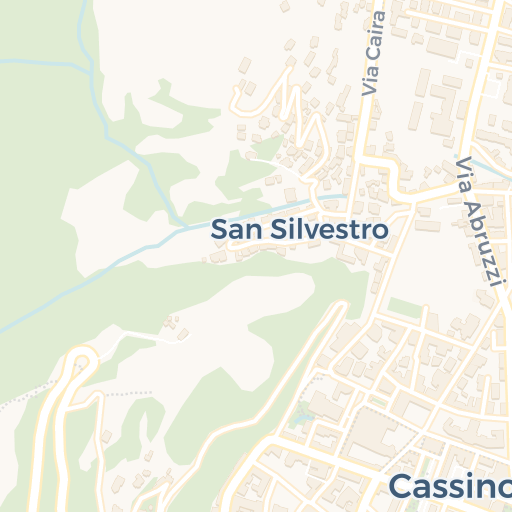
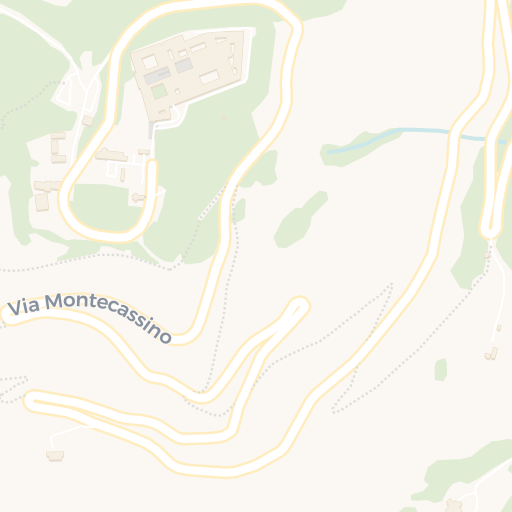
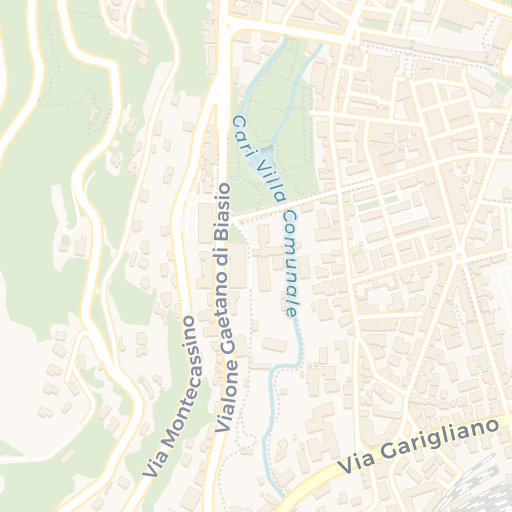
Get directions Open in Apple Maps
© OpenStreetMap contributors · © CARTO · 41.49, 13.81389
Plan your visit
The Abbey of Monte Cassino is a national monument and a working Benedictine house, listed by the Direzione regionale Musei Lazio. The abbey and its museum keep different hours, and in winter they diverge sharply.
From 1 November to 31 March the abbey opens Monday to Saturday 9.30-16.50 and on Sunday 9.30-17.15, while the museum opens only on Sundays and public holidays, 9.30-17.15. From 1 April to 31 October both open daily, 9.30-18.30. Visits are suspended during religious celebrations.
Monte Cassino does not take part in the "Domenica al Museo" scheme, so there is no free admission on the first Sunday of the month, unlike most Italian state sites. For ticket prices the regional directorate refers visitors to the abbey's own site at abbaziamontecassino.it, and no figure is quoted here because that page was not checked for this entry. Guided visits are available; the number is +39 0776 311529. (Hours as published by the operator on 8 October 2026 -- confirm before travelling.)
Verified against Italian Ministry of Culture, October 2026.
When to visit
April to October is the straightforward half of the year: the abbey opens 9.30 to 18.30 every day and the museum keeps the same hours daily. From 1 November to 31 March it gets complicated -- the abbey runs 9.30 to 16.50 Monday to Saturday and 9.30 to 17.15 on Sunday, but the museum opens only on Sundays and public holidays, so a winter weekday gets you the abbey without the collection. Visits stop during services in any season. Note too that the abbey on Monte Cassino does not take part in the free-first-Sunday scheme that most Italian state museums run, so there is no saving in timing a visit for it. Spring and autumn also give the clearest views down over Highway 6 and the valley, which is the part of the site that explains 1944 better than any caption.