

Monterozzi Necropolis
Last updated on October 8, 2026Why visit Monterozzi Necropolis
About 200 of the roughly 6,000 tombs cut into the Monterozzi hill are painted, and together they are the largest body of Etruscan painting that exists. That is the whole argument. Almost everything else known about Etruscan art comes from objects; here there are rooms, and on their walls the Etruscans painted themselves -- banqueting, dancing, hunting and fishing, playing the double pipes, and at the late end being escorted into the underworld by blue demons. One tomb holds the only known picture of the Etruscan demon Tuchulcha. Several are among the rare Etruscan tombs with erotic frescoes.
Visit if you:
- want to see what the Etruscans looked like to themselves, which exists nowhere else at this scale
- are interested in painting that was never meant to be seen by the living
- care about how a culture's picture of death changes -- the early tombs are parties, the late ones are demons
- are doing the pair with Cerveteri and want the painting half
Skip it if you:
- expect to see all of them: only a fraction of the 200 painted chambers are open at any time, and many frescoes have been moved to the Tarquinia National Museum to preserve them
- cannot manage steps: the chambers are underground, reached by inclined corridors or stairways cut into the rock
- are coming for monumental architecture -- that is Cerveteri, where the tombs are streets and houses; here the architecture is a frame for the paint
Quick facts
- Type: Ruins, Cemetery, Historic Place
- Local name: Necropoli dei Monterozzi (vedi la pagina italiana)
- Visitor access: Open to visitors
- UNESCO World Heritage Site: Yes
Visit responsibly
The painted rooms at Monterozzi were sealed for two and a half thousand years and have been open for a couple of hundred. Humidity, temperature and the breath of visitors are the variables that destroy Etruscan wall painting, which is why entry to the chambers is controlled, why some are shown through glass, and why many of the frescoes have been removed altogether to the Tarquinia National Museum in order to preserve them. Where a tomb is shut, that is conservation rather than inconvenience.
Flash is the specific hazard. The pigment on these walls is the largest surviving body of Etruscan painting, and its damage is cumulative and invisible exposure by exposure.
About 600 tumuli were still standing here in the nineteenth century and many were razed after being dug. The lesson the site teaches about its own excavation is that what is removed to study it does not come back, and the 6,000 graves include a great many that have never been opened.
Tarquinia has both the necropolis and the national museum that holds what came out of it, and the two are a single subject split across two tickets. Doing only the hill leaves half the evidence unseen and half the town's economy untouched.
Where it is
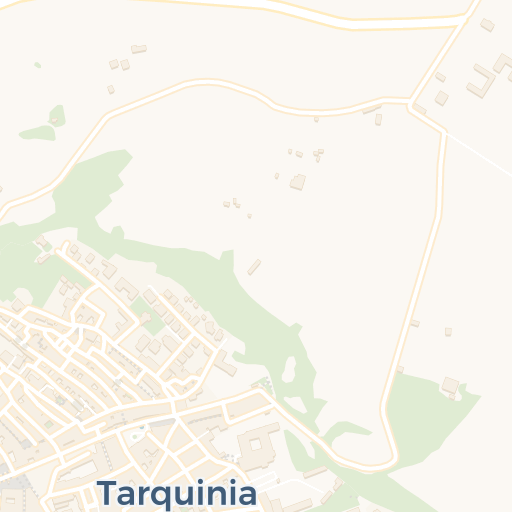
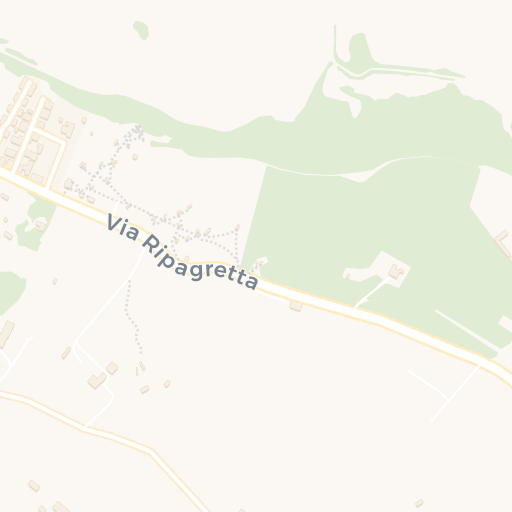
Get directions Open in Apple Maps
© OpenStreetMap contributors · © CARTO · 42.25056, 11.77
Plan your visit
The Monterozzi necropolis is open Tuesday to Sunday from 09:00 to 17:00, with the ticket office closing at 16:00, and closed on Mondays -- the timetable the Comune di Tarquinia publishes for it, valid from 1 January 2024. The entrance is on Via Ripagretta, 01016 Tarquinia, on the hill east of the town.
No admission price is quoted here, deliberately. The state park's own pages could not be read when this was written, and the commercial site that does publish figures for Cerveteri and Tarquinia offers nothing to show it is the operating institution rather than a booking intermediary, so its numbers are not repeated. Buy at the gate.
Plan the museum into the same trip, because the painted material is split between the two. The Museo Archeologico Nazionale di Tarquinia, in Palazzo Vitelleschi at Piazza Cavour 1, keeps longer hours than the necropolis: Tuesday to Sunday 09:00 to 19:30, last entry 18:30, closed Mondays, valid from 1 October 2024. Several detached tomb paintings and much of the material excavated from these graves are displayed there, in a Renaissance palace built for Cardinal Giovanni Vitelleschi between 1436 and 1439 and the museum's seat since 1924. Doing the necropolis first and the museum after is the order that makes sense of both, and the necropolis closes earlier.
Know what is actually open. The plateau called Monterozzi runs parallel to the Tyrrhenian coast for six kilometres and about three across, divided into the localities Calvario, Primi Archi, Secondi Archi, Scataglini and Doganaccia -- and the part open to the public is Calvario, where the comune gives 22 hypogea currently visitable. About 6,000 graves are known across the whole plateau, roughly 200 of them with painted chambers, so what a visitor sees is a curated fraction. Each painted chamber is reached by its own stair down from the surface and viewed through glass at the bottom.
The comune lists the site's access provision as assistance for disabled visitors, captions and signed routes. The necropolis's own contact is 0766 856308, at via Ripagretta, with pa-certa@cultura.gov.it for the managing park.
Verified against Comune di Tarquinia, October 2026.
When to visit
The painted chambers at Monterozzi are underground, which flattens the usual seasonal argument: they are the same temperature and the same darkness in August as in January, and weather affects only the walk between them. April to June and September to October are still the best months, because that walk is across an open hill east of Tarquinia with little shade, and because the Tyrrhenian coast here fills up in high summer. Winter is quiet and perfectly workable on a dry day. The more useful question than the month is what is open: only a portion of the roughly 200 frescoed tombs is accessible at any one time, and the rotation is the operator's rather than the calendar's -- so a specific tomb is worth confirming rather than assuming.