

Villa d'Este
Last updated on October 8, 2026Why visit Villa d'Este
Fifty-one fountains, 398 spouts, 364 water jets, 64 waterfalls and 220 basins, fed by 875 metres of canals -- and not one pump anywhere in it. Every drop at the Villa d'Este moves because the hillside drops 45 metres and a cardinal diverted a river through the town to exploit that. It was built between 1560 and 1572 by Ippolito II d'Este, who wanted to be Pope, was passed over five times, and spent the money on this instead. What survives is the sixteenth-century water garden that Europe copied for two hundred years, from Portugal to Saint Petersburg.
Visit if you:
- want to understand how a garden works as engineering, not only as planting
- are fascinated by the Renaissance appetite for turning myth into landscape
- like water you can walk behind, stand under and hear before you see
- care about the point where a private obsession became a public monument
Skip it if you:
- cannot manage long flights of stairs and a continuous 45-metre descent and climb -- the garden is a hillside, and the route back up is the same one you came down
- are expecting furnished Renaissance interiors -- the salon walls are bare, and much of the original statuary is in the Louvre, the Vatican and the Capitoline
- are coming for the building rather than the garden -- the villa is the smaller half of the visit
Quick facts
- Type: Palace, Garden
- Local name: Villa d'Este (vedi la pagina italiana)
- Visitor access: Open to visitors
- Architectural style: Italian Renaissance
- UNESCO World Heritage Site: Yes
Visit responsibly
Everything here runs on gravity from a diverted river, with no pumps anywhere in the system. The 875 metres of canals and the buried pipework are sixteenth-century and still in service, which is why the paths beside them are fenced where they are -- stepping over a rail onto a canal edge puts weight on a working structure, not on decoration.
The mosaic and shell surfaces are the fragile part. The Grotto of Diana still has some of its original sixteenth-century majolica floor tiles, and the wall fountain in the Hall of the Fountain is encrusted with glass, seashell and stone that comes away under a hand. Touching is how those surfaces are lost, a fragment at a time.
The wall behind the Hundred Fountains carried carved panels of scenes from Ovid that have largely gone, and what remains is under heavy vegetation. Pulling the growth aside for a clearer look or a photograph is how the last of it goes.
Tivoli absorbs a day-trip wave from Rome that concentrates in the middle of the day, and the town has a second major site in Hadrian's Villa and a third in the Villa Gregoriana gorge. Visitors with a whole day to give, who eat in Tivoli rather than returning straight to Rome, spread both the crowding and the spending across a town that otherwise sees the coaches and not much else.
Where it is
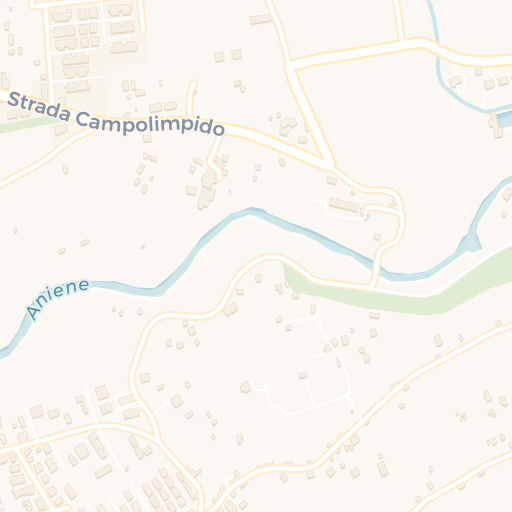
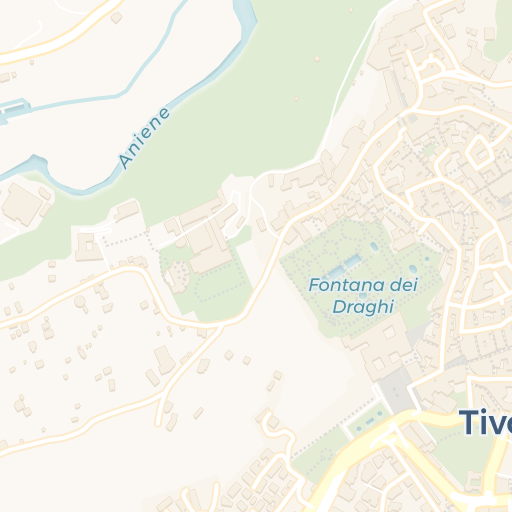
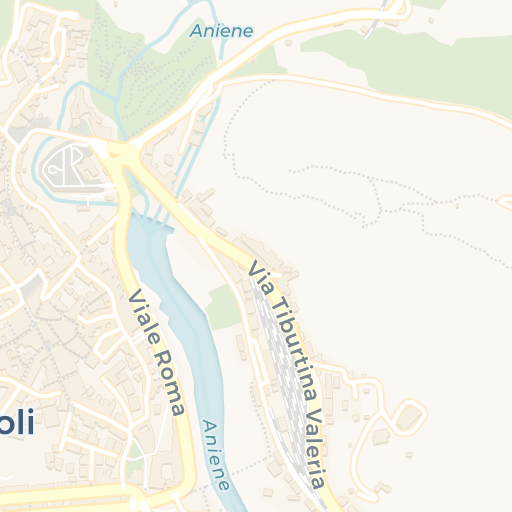
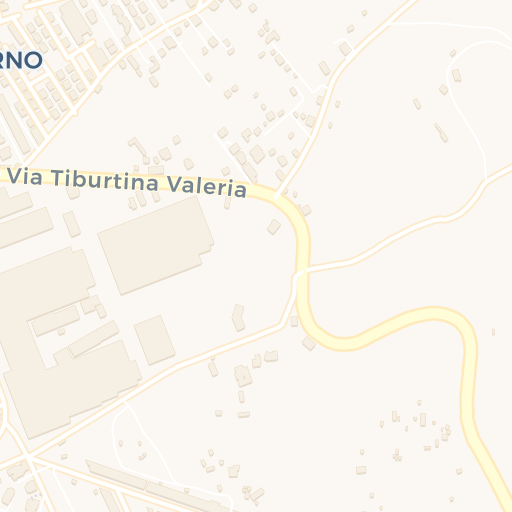
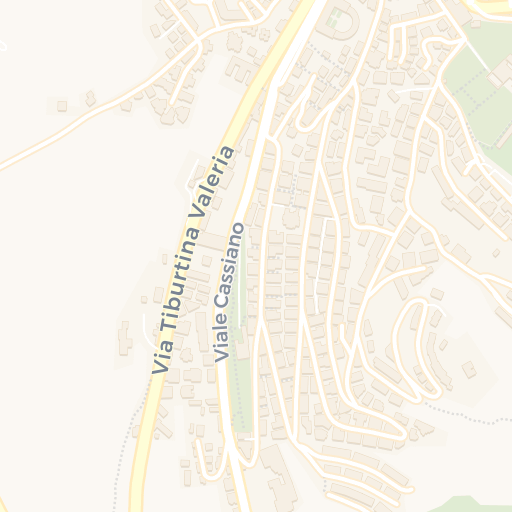
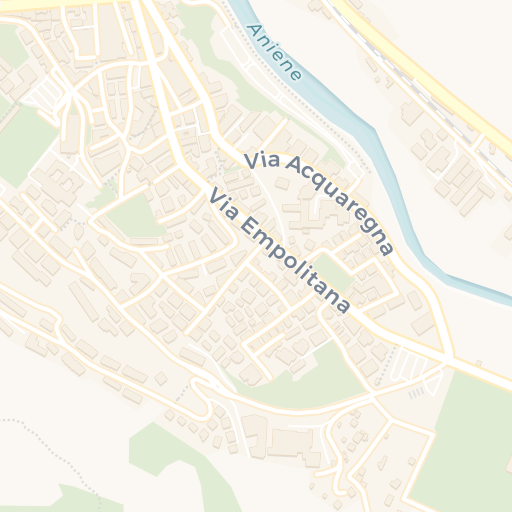
Get directions Open in Apple Maps
© OpenStreetMap contributors · © CARTO · 41.9625, 12.79611
Plan your visit
The Villa d'Este is an Italian state museum run by the Istituto Villa Adriana e Villa d'Este, and a UNESCO World Heritage Site inscribed in 2001. The ticket office is at Piazza Trento 5, beside the church of Santa Maria Maggiore, which puts you at the top of the garden; one ticket covers the villa rooms and the garden as a single visit. Tivoli's other state site, Hadrian's Villa, is a separate ticket at a separate office outside the town, at Largo Marguerite Yourcenar 1 -- the two are not a combined admission by default.
Monday is a half day. The villa opens daily, but on Mondays not until 2pm, with the morning closed for maintenance; when a public holiday falls on a Monday it opens at 8.45am instead and the following Tuesday becomes the 2pm day. It is closed on 1 January and 25 December. Entry is free on the first Sunday of each month, on 25 April, 2 June and 4 November, and for women on 8 March.
Rain can turn the fountains off. The operator states that precipitation, and the swelling of the Aniene that follows it, may temporarily suspend the water supply to the fountains. Since the fountains are the reason to come and they run on the river rather than on pumps, a wet spell is worth checking before travelling rather than after arriving. The hydraulic organ in the Organ Fountain is played daily from 10.30, every two hours.
On very busy days the operator may limit entry for safety, alter the route and close some rooms, and the exit is then taken from the gate on Piazza Campitelli. The practical constraint otherwise is the slope rather than the queue: the garden falls more than 45 metres and there is no step-free circuit, with the climb back to the exit retracing the descent at the end of the visit. Allow for that in summer, when long stretches of the route have no shade.
Verified against Italian Ministry of Culture, October 2026.
When to visit
April to early June and September to October are the months to aim for: the fountains run, Tivoli sits high enough to stay cooler than Rome, and the garden has shade in it. July and August are the peak and the worst pairing here -- the slope is open in long stretches, the climb back up is 45 metres, and this is a standard day trip out of Rome, so the middle of the day carries both the heat and the coach arrivals. Come at opening and walk down to the fishponds first, which reverses the crowd and happens to be the direction the garden was designed to be seen in. Winter is quiet and the planting is bare, but the fountains are architecture rather than flowers and they read perfectly well without leaves. Late afternoon light falls along the Hundred Fountains, which run roughly across the slope rather than down it.