

Chiesa di San Salvatore, Castellina in Chianti
Last updated on October 16, 2026Why visit Chiesa di San Salvatore, Castellina in Chianti
Because the body of the patron saint of the Chianti is in a glass case here, and the cockerel on the town's arms is crowing beside this church.
San Fausto martire was given to the church by a wealthy Sienese family, and from that moment became protector of the Chianti, his help invoked in drought and at the vintage. Castellina keeps his feast on 18 September. Inside there is also a detached fresco of the Madonna and Child by the early-fifteenth-century Maestro di Signa, and a fine polychrome wooden San Barnaba of the mid-Quattrocento.
The friction is that the building is not old. It was medieval; it was destroyed in the last war and rebuilt neo-Romanesque by the Sienese architect Menotti Lucattelli. What you are looking at is a careful twentieth-century church around some rescued older things.
The smart way is to treat it as the end of the walk. It stands at the far end of Via Ferruccio: come down the town's main street from the Rocca, and finish here. Ten minutes, and the two works and the reliquary are the reason.
Quick facts
- Type: Church, Sacred Place, Historic Place
- Local name: Chiesa di San Salvatore, Castellina in Chianti (vedi la pagina italiana)
- Built: Medieval in origin; destroyed in the Second World War and rebuilt in neo-Romanesque style
- Designed by: Menotti Lucattelli
- Architectural style: Neo-Romanesque rebuilding of a medieval church
Visit responsibly
This is a parish church with relics in it, not an exhibition. The body of San Fausto martire is an object of devotion for the comune, not a curiosity; the reliquary case deserves the same restraint you would show at any shrine.
Dress and behave for a church in use. No hours are published because none need to be: this building serves its parish.
Two fragile works, both rescued. A detached fresco is a painting that has already been cut from its wall once, and a polychrome wooden statue is as sensitive to handling and flash as any panel. Look, do not touch, and check before photographing.
Give the money where it is needed. The church charges nothing. If you want to contribute to how Castellina looks after what it has, the museum ticket at €9.00 funds an institution run for the comune.
Where it is
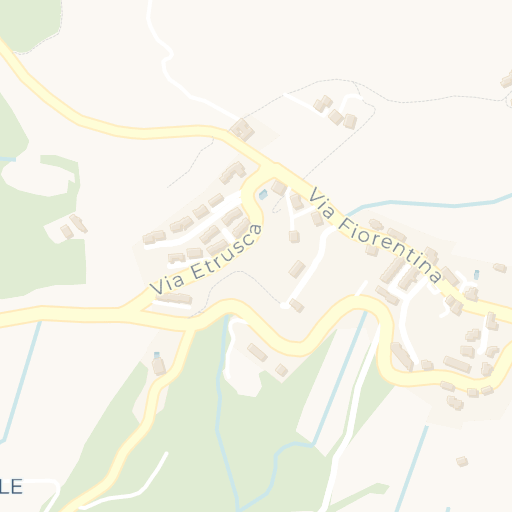
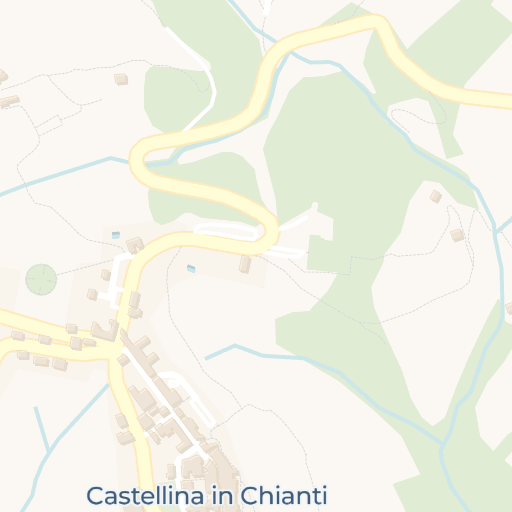

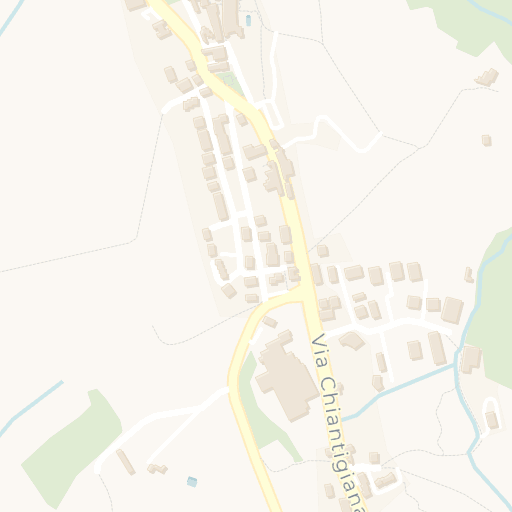

Get directions Open in Apple Maps
© OpenStreetMap contributors · © CARTO · 43.4668, 11.2882
Plan your visit
Where. At the end of Via Ferruccio, the street that runs the length of Castellina's historic centre from the main square. Visit Tuscany places it there explicitly: walking down via Ferruccio, at the end of this street you find the church of San Salvatore.
What is published about hours: nothing. No operator publishes an opening time or an admission charge for this church. The Museo Archeologico del Chianti, the comune's own ticketed attraction two hundred metres away, publishes hours, prices and booking rules for itself and for nothing else. This page therefore makes no claim about when the church is open.
Treat it as a working parish church. It holds the relics of the comune's patron saint and is in use. Visiting hours in such a building are usually bounded by services rather than by a ticket desk.
Who to ask. In the absence of anything published, the museum at Piazza del Comune 17/18, telephone 0577 742090, is the nearest staffed point in the town.
Getting to Castellina. From Florence, the Firenze–Siena link road towards Siena/Roma, exit at San Donato and continue for Castellina in Chianti; from Siena, the SR 222.
Verified against Visit Tuscany (Toscana Promozione Turistica), October 2026.
When to visit
18 September is the day this church is the centre of the town. San Fausto is Castellina's patron and his feast falls then — a saint invoked at the vendemmia, honoured immediately before it.
Otherwise, come when you are walking the town. The church sits at the end of Via Ferruccio, so it is the natural end of a walk that begins at the Rocca. Ten minutes is enough.
No hours are published, by anyone. Expect the rhythms of a parish church rather than of a museum, and do not build a journey around finding it open.
August evenings are busy in the street outside. Around 10 August, for Calici di Stelle, the town's streets fill with markets and concerts and the museum stays open late — the one time of year the centre is crowded after dark.