

Abbey of Sant'Antimo
Last updated on October 14, 2026Why visit Abbey of Sant'Antimo
For an architectural rarity you will not see again in central Italy. The church has an ambulatory with radial chapels — a walkway curving behind the high altar with chapels radiating off it — which is a French idea, and in the whole of Italy the scheme is known in only four other buildings, all of them far to the south or in the Marche.
Then two things nobody expects. The outer walls are alabaster: hold a light against them and the stone passes it back to your eye. And on one capital is Daniel in the lions' den, carved by the French Master of Cabestany — Daniel praying between the hungry lions on one face, the lions eating his accusers on the others.
It is also the reason Montalcino exists. At its height this abbey ran 38 churches from Pisa to Grosseto and about 1,000 farm estates, and its most important possession was the castle of Montalcino, where the abbot lived. The town was the abbey's property, not the other way round.
The friction is real: it is about 10 km from Montalcino, so you need a car — and nobody publishes a timetable, which matters because the monks' sung offices are what most people come for.
Quick facts
- Type: Monastery, Church, Sacred Place, Historic Place
- Local name: Abbazia di Sant'Antimo (vedi la pagina italiana)
- Built: Present church begun before 1118; Carolingian remains in the crypt and chapel
- Architectural style: Romanesque, with a French-inspired ambulatory
Visit responsibly
This is a working monastery, not a monument with monks in it. A community has lived here since 1992 and has been Olivetan Benedictine since January 2016. If you arrive during an office, sit at the back or stay outside — the sung liturgy is worship that visitors are permitted to attend, not a performance scheduled for them.
Do not touch the alabaster. The outer walls are built of it, it is a soft stone, and its translucency is the single most remarkable thing about the building. Hands on a soft translucent wall are exactly what degrades the surface that makes the effect work. Hold your light near it, not your palm.
No flash in the Cappella Carolingia. The frescoes by Giovanni d'Asciano are in what is now the working sacristy — unglazed medieval paint in a room the community uses.
Keep out of the choir and move quietly in the ambulatory. The ambulatory exists precisely so that visitors can circulate to the Martyrium without crossing the monks' space. Using it as it was designed is the most elegant piece of good behaviour available at this site.
Leave a donation. There is no ticket and no published charge, and this is a church that spent the 19th century as a stable before the state rescued it. A building with an almost-unique ambulatory and alabaster masonry is expensive to keep standing, and nothing is coming in at a turnstile.
Park where you are directed at Castelnuovo dell'Abate. The abbey sits in a small rural locality with narrow approaches, and the valley setting is part of what you came for — do not spoil it by leaving a car in the middle of it.
Where it is
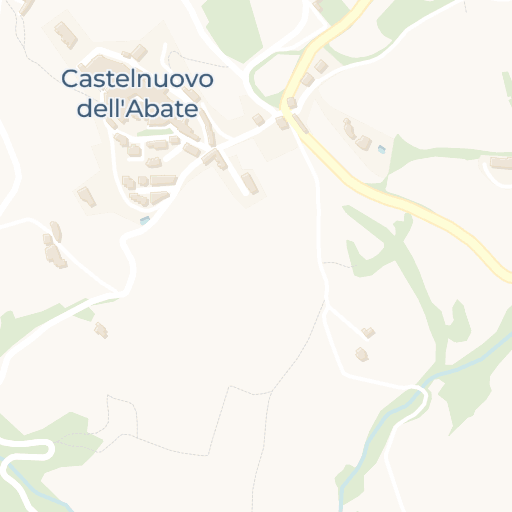
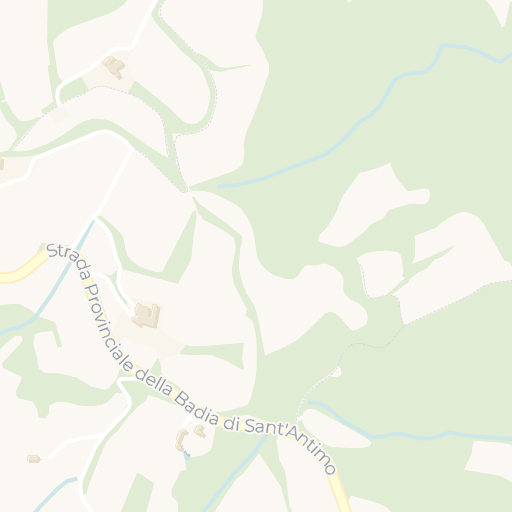
Get directions Open in Apple Maps
© OpenStreetMap contributors · © CARTO · 42.99964, 11.51564
Plan your visit
No liturgical timetable, no opening hours and no entry charge for Sant'Antimo are published anywhere we can verify, and this page therefore asserts none. That gap matters more here than at any other site in this group, because the sung offices of the monastic community are the single thing most visitors travel for.
Neither the abbey's own site — including its events page — nor the municipality publishes a schedule. So:
- Do not drive out for a specific service without confirming it first. This is the one piece of advice on this page that will save someone a wasted journey. The community has been Olivetan Benedictine since January 2016; the hours of its offices are its own to set and change.
- Ask the municipality. The Comune di Montalcino switchboard is 0577 80441, at Piazza Cavour 13.
- Go in the morning if you are going on spec. The usual rule for Italian churches, and the alabaster walls are best read in strong daylight.
Getting there
The abbey is at Castelnuovo dell'Abate, roughly 10 km from Montalcino, and about 9 km from the Via Francigena. There is no visitor-usable public transport out to it, so a car or a hired driver is effectively required — and if your day in Montalcino includes cellar tastings, settle who is driving before the first glass rather than after.
What to do when you get there
Walk the outside first: the alabaster walls and the Carolingian portal are both exterior, and the setting in the valley is part of the point. Then, inside, go behind the altar into the ambulatory, which is what the building is famous for, and find the Daniel in the lions' den capital.
Verified against Comune di Montalcino, October 2026.
When to visit
A spring or autumn morning, with the service times confirmed in advance. The confirmation matters more than the season: no timetable is published anywhere, and the monks' sung offices are what most people come for.
April to June and September to October are the best months. The valley around the abbey is at its greenest in spring and its most golden in early autumn, the drive out from Montalcino is pleasant rather than punishing, and the light is strong enough to read the alabaster walls — which need real daylight to show their translucency.
July and August: go early. The abbey stands in open valley country with little shade and the approach road is unshaded too.
November to March is quiet, and a cold clear morning is genuinely good here — the building is austere and takes low light well. But winter is also when an unpublished timetable is most likely to have contracted, so the phone call stops being optional.
In any season, the morning is better than the afternoon for the interior, because the ambulatory and the crypt are the darkest parts of the church and depend on what comes through the windows.