

Commenda di Sant'Eufrosino, Volpaia
Last updated on October 16, 2026Why visit Commenda di Sant'Eufrosino, Volpaia
Because the best Renaissance building in the Chianti is in a hamlet of forty-nine people, and it is a national monument.
The Commenda di Sant'Eufrosino was built between 1443 and 1460 and declared a National Monument in 1982. Its plan refers to the early Florentine Renaissance chapels — the sacristy and the Cappella Pucci of the Santissima Annunziata in Florence — and its pediment recalls Michelozzo's at Santa Maria delle Grazie in Pistoia.
The friction is that it was deconsecrated in 1932 and its masterpiece left. The Cosimo Rosselli altarpiece of 1480 that stood here is now in Florence, and nobody publishes an opening time for the building.
The smart way is to treat it as a facade on a square. It stands isolated on sloping ground opposite the castle's ancient gate, on a small picturesque piazza — and that facade is reproduced on the label of Volpaia's Chianti Classico, which is how most people have already seen it without knowing.
Quick facts
- Type: Church, Sacred Place, Monument
- Local name: Commenda di Sant'Eufrosino, Volpaia (vedi la pagina italiana)
- Built: Begun 1443 and concluded after 1460; declared a National Monument in 1982
- Built for: Ser Pietro di ser Lorenzo della Volpaia, in gratitude to Pope Eugene IV
- Architectural style: Early Florentine Renaissance hall church, Michelozzian in inspiration, interpreted close to Giuliano da Maiano
Visit responsibly
This is a National Monument, listed since 1982, standing in a hamlet of forty-nine residents. Both halves of that sentence should govern how you behave in front of it.
It is deconsecrated, not derelict. No hours are published and the interior is not an open attraction; do not try doors.
The square is somebody's street. The piazzetta in front of the Commenda is the public space of a village of forty-nine people, facing where the castle gate used to be.
The fabric is soft stone. A facade of roughly trimmed stone that has lost its intended plaster, and an interior order entirely in pietra serena, are both vulnerable to handling.
If you want to support it, spend in Radda. The comune is 1,431 people and maintains everything in this territory on that base.
Where it is
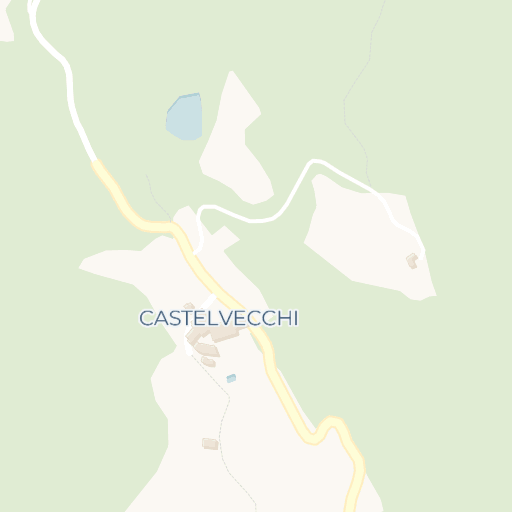
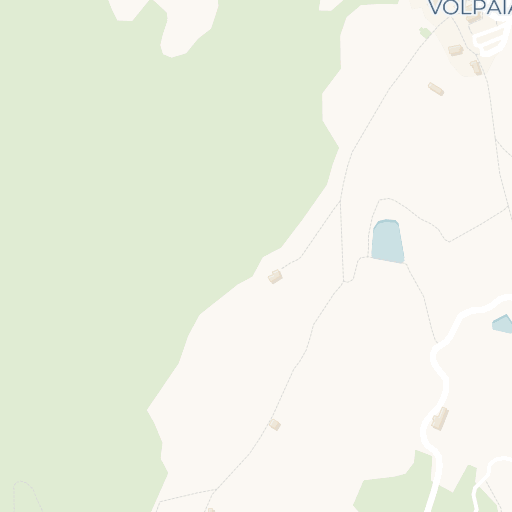
Get directions Open in Apple Maps
© OpenStreetMap contributors · © CARTO · 43.5174, 11.3804
Plan your visit
What you can see without arrangement is the outside, and it is the thing the record praises: the facade, its pediment and its setting on a small square facing the castle's ancient gate, in the hamlet of Volpaia.
No hours and no admission are published. The church was deconsecrated in 1932 and no operator states an opening time, a price or an access condition for it. This page makes no claim that the interior can be entered.
The altarpiece is not here. Cosimo Rosselli's Madonna and Child between Saints Eufrosino and John the Baptist of 1480 is in Florence, at the national centre for Renaissance studies in Palazzo Strozzi.
Getting here. Volpaia is a frazione of Radda in Chianti at 617 metres, reached by road north of the town. Radda's own centre is a limited-traffic zone administered by the comune's Polizia Locale, 0577 739622 / 0577 739623, Monday to Saturday 08:30–13:30.
For anything else, the comune: Piazza Ferrucci 1, 53017 Radda in Chianti, switchboard 0577 739633.
Verified against Comune di Radda in Chianti, October 2026.
When to visit
Daylight, and preferably bright. Everything reliably available here is exterior: a pediment, a plain rendered-less facade, a plaque of 1906 and a small square. Flat grey weather gives you very little.
Spring and autumn suit the drive and the hamlet. Volpaia sits at 617 metres on an exposed ridge, and Radda's own calendar concentrates in those seasons — the Chianti Ultra Trail in spring, Chianti d'Autunno in November.
Summer is hot and shadeless up here. The square in front of the church faces the castle gate and has little cover.
Winter is the quietest and coldest. The comune is climate zone E; Volpaia is higher than Radda, and the ridge road ices.