

Propositura di San Niccolò, Radda in Chianti
Last updated on October 16, 2026Why visit Propositura di San Niccolò, Radda in Chianti
Because this church had no facade for six hundred years, and the one it got in 1926 came with a square and a fountain.
The characteristic front was built between 1926 and 1930 to a design by Adolfo Coppedè — the building had always been without one. In the same campaign the square below was remade and given the public fountain whose water runs from a lion's mouth. It is a textbook example of late historicist eclecticism applied in a minor Tuscan centre.
The friction is that the war took most of the rest. The church, like the historic centre of Radda, was notably damaged in the Second World War — so badly that without the pastoral-visit reports and the church inventories it would be very hard to recover what it looked like in the fifteenth and sixteenth centuries.
The smart way is to look up from the Palazzo del Podestà. The church stands opposite it, raised, up a flight of steps from via Roma. Inside, find the Madonna del Rosario of about 1633 — long given to Alessandro Allori, now reassigned to Francesco Boldrini.
Quick facts
- Type: Church, Sacred Place, Historic Place
- Local name: Propositura di San Niccolò, Radda in Chianti (vedi la pagina italiana)
- Built: Romanesque in origin, first recorded 1260; facade built 1926, bell tower rebuilt in the 1950s
- Designed by: Adolfo Coppedè (1926 facade)
- Architectural style: Romanesque core with a 1926 facade, variously described as neo-Romanesque and neo-Gothic
Visit responsibly
This is the town's parish church, not an exhibit. It is the principal place of worship of Radda in Chianti, and no visiting hours are published because none are needed by the people who use it.
The frescoes are nearly gone already. The Carlo Coppedè work inside the arch is almost invisible after a century outdoors. It does not need flash photography or touching.
The square belongs to everyone, including the town hall. The Palazzo del Podestà opposite is the working comune, and the piazza between them is Radda's one public space.
Arrive on foot. The centre is a limited-traffic zone; the church is at the top of a flight of steps, and there was never any question of driving to it.
Where it is
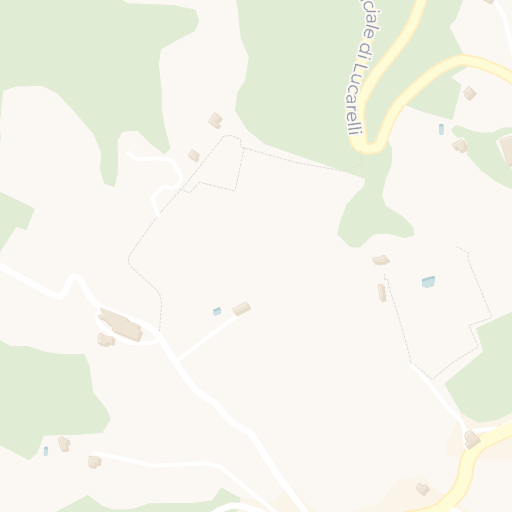
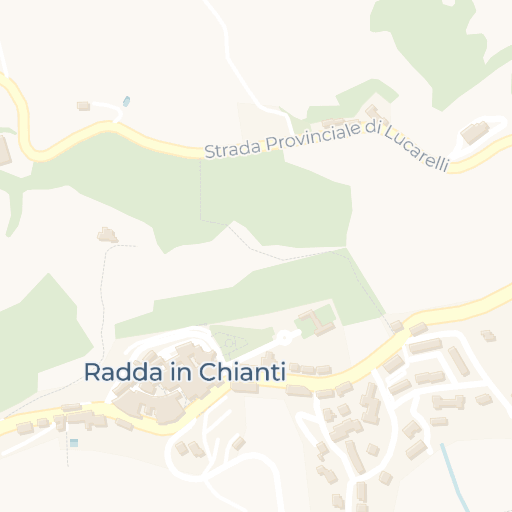
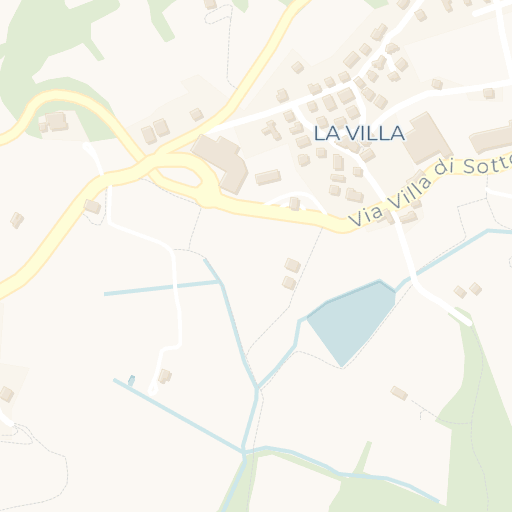
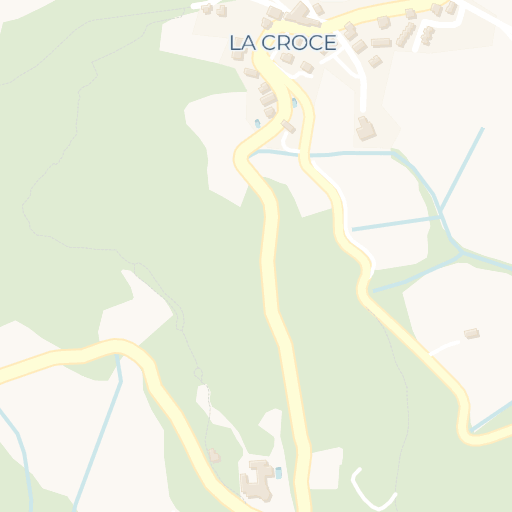
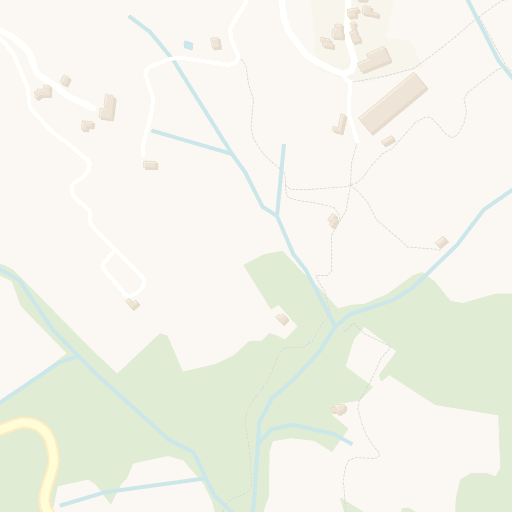
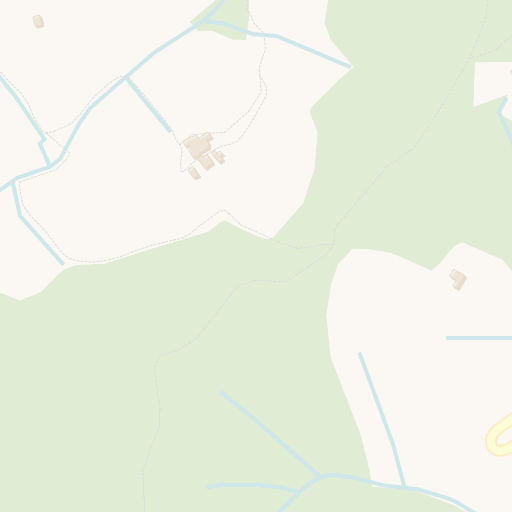
Get directions Open in Apple Maps
© OpenStreetMap contributors · © CARTO · 43.4856, 11.3741
Plan your visit
Where. On Radda's central square, facing the Palazzo del Podestà, raised above it and reached by a flight of steps up from via Roma. Visit Tuscany places it at the end of via Ferruccio, the street that runs the length of the centre.
No hours and no admission are published. No operator states an opening time, a price or an access condition for this church. It is the principal Catholic place of worship of Radda in Chianti and should be treated as a church in use rather than a museum.
What is always available is the exterior: the 1926 facade with its round arch, rose window, lion-head corbels and terracotta lunette — and, on the square below, the public fountain made in the same campaign, its water issuing from a lion's mouth.
Getting here. The historic centre is a limited-traffic zone administered by the comune's Polizia Locale, 0577 739622 / 0577 739623, Monday to Saturday 08:30–13:30. Park outside and walk in; the church is at the top of the steps.
Who to ask. The comune, which occupies the building opposite, is at Piazza Ferrucci 1, switchboard 0577 739633.
Verified against Comune di Radda in Chianti, October 2026.
When to visit
The exterior is the dependable part, and it is always there. The facade, the steps, the square and the lion-mouth fountain need no opening hours.
Bright light helps, because the best detail is faint. The frescoes inside the great arch — the Blessing Christ above the rose window, the Nativity below — are today almost invisible. Flat weather removes them entirely.
Come when the square is in use. From June to August the Chianti Festival brings theatre, music and dance to Radda; the Festa del Perdono is in late August, and Radda nel Bicchiere in May.
If you want the interior, come at a service time. Nothing is published, and a working parish church in a comune of 1,431 people keeps the rhythms of its parish.