

Acropolis of Alatri
Last updated on October 8, 2026Why visit Acropolis of Alatri
A single stone lintel of about 27 tonnes, second in Europe only to the Lion Gate at Mycenae, sitting over a doorway in a wall of megaliths that were cut from this hill and fitted together without a gram of mortar. The acropolis of Alatri is 19,000 square metres of polygonal masonry ringing the top of the town, and nobody agrees how old it is -- estimates run from the sixteenth century BC to the third. The smaller of its two gates opens into a corridor roofed by nine corbelled monoliths, a technique otherwise paralleled only inside the pyramid at Egyptian Memphis, and carries three carved phalli above the lintel.
Visit if you:
- want to stand in front of megalithic building and be unable to date it
- are interested in how stones this size were fitted without mortar
- like the idea of a Bronze-Age-looking fortress that is also the middle of a living town
- care about the point where archaeology and speculation meet -- this site attracts both
Skip it if you:
- are expecting excavated ruins: the acropolis is a walled enclosure with a cathedral, a bishop's palace and trees on it, not an archaeological park
- cannot climb -- it is the top of a hill at about 500 m, reached by gates and a ramp
- want the medieval town that stood up here: it was demolished in 1326 and only fragments were found
Quick facts
- Type: Ruins, Historic Place
- Local name: Acropoli di Alatri (vedi la pagina italiana)
- Visitor access: Open to visitors
- Admission: Free
- Architectural style: Polygonal (cyclopean) masonry
- Size: 19,000 m2 enclosure
- Elevation: 502 m
Visit responsibly
These walls are dry-stone on a monumental scale: polymorphic megaliths fitted into each other without lime or cement, which means every block is held by its own weight and by the fit of its neighbours. Climbing on them is loading a structure with no binder in it, and at the Pizzale that structure is fifteen blocks tall.
The carved surfaces are the losses in progress. The three phalli above the Porta Minore are described as already deteriorated by time, and the winged figure on the Pizzale cornerstone is worn enough that it is also read as a solar globe. Hands on either accelerate the one thing that cannot be reversed.
The acropolis is not a fenced archaeological zone. It carries a working co-cathedral and the bishop's palace, it was a cemetery until 1846 in the walled garden alongside, and since the twentieth century it has been the town's park. People use it as a place rather than visit it as a site.
Alatri is an ordinary town in the province of Frosinone that happens to be ringed by one of the great megalithic circuits of Italy, and it sees very few visitors. What it gets from a visit is what is spent in it.
Where it is
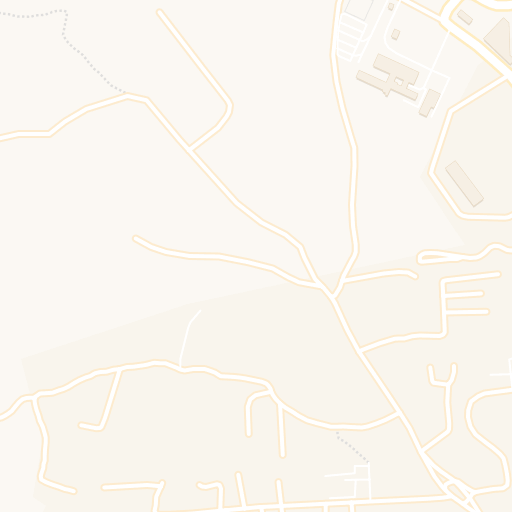
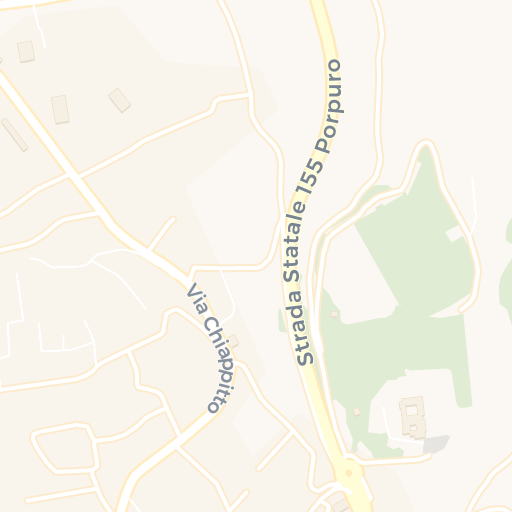
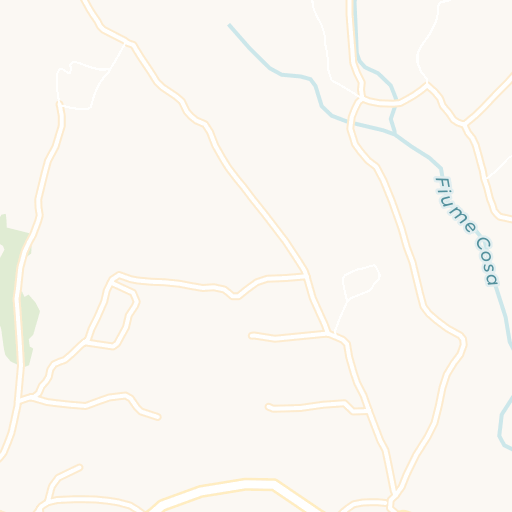
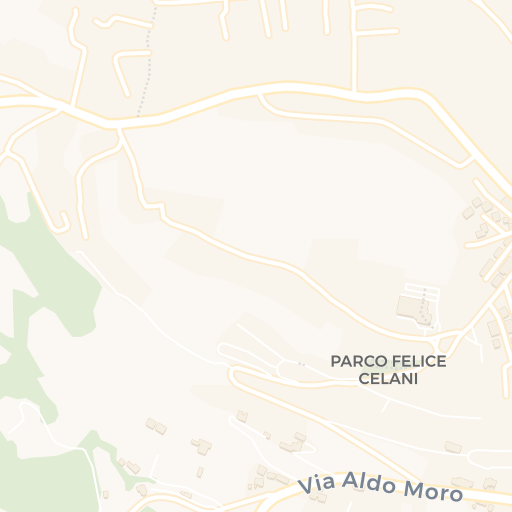
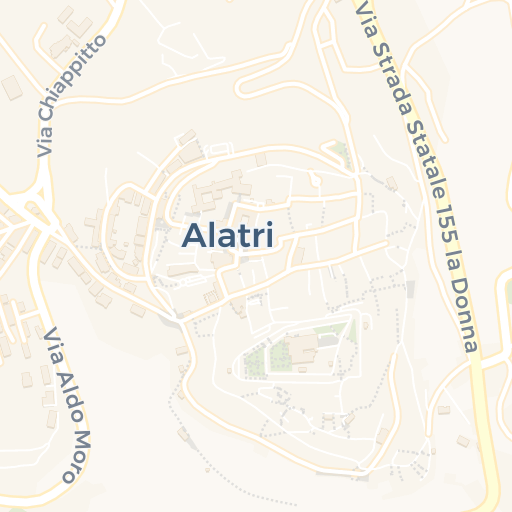
Get directions Open in Apple Maps
© OpenStreetMap contributors · © CARTO · 41.72639, 13.34222
Plan your visit
Admission: Free
The acropolis is open ground at the top of Alatri, at 502 m above sea level and in the middle of the historic centre -- a 19,000-square-metre enclosure of polygonal walls carrying the co-cathedral of San Paolo, the bishop's palace and, since the twentieth century, planted avenues. No ticketing applies to the enclosure itself. The Comune di Alatri gives the cathedral's address as Piazzale dell'Acropoli, Alatri 03011 (FR), and its Ufficio Cultura as the contact for the site.
Go up by the ramp on the north side: it is the easiest access, and it is the one the ancient colonnade from the forum fed into, with the stone lion at its head. The alternative is the nineteenth-century stairway to the Porta Maggiore on the south side. The via Gregoriana runs right round the circuit and is the way to see the walls from outside, which is where their scale registers. The Porta Minore, also on the north, measures 2.12 by 1.16 metres and gives onto a narrow ascending corridor, so it is a passage rather than a convenient entrance.
Four things are worth looking for and easy to miss: the winged figure, or solar globe, on the base cornerstone of the Pizzale at the south-east corner; the three false doors about 90 cm deep near the Porta Maggiore; the Oscan inscriptions at the upper left of the Porta Minore; and the part of the ancient altar's polygonal base still visible under the north side of the cathedral. Opening arrangements for the cathedral itself are set by the parish and are separate from access to the acropolis, on which the Comune publishes no hours.
Verified against Comune di Alatri, October 2026.
When to visit
The acropolis of Alatri is open ground at the top of a town, so it works in any season and the choice is about light. The walls are the subject and they are best in raking light -- early morning or late afternoon -- when the joints between the megaliths read as joints rather than as a grey surface; the same is true of the winged figure on the Pizzale cornerstone and the weathered phalli above the Porta Minore, both of which disappear under flat midday sun. The Pizzale faces south-east, so if the solar reading of that relief interests you, early is the hour. April to June and September to October are the comfortable months; the esplanade has had trees on it since the twentieth century, which helps in summer, but the climb to 500 m does not. Winter is clear and quiet.