

Mausoleum of Lucius Munatius Plancus
Last updated on October 9, 2026Why visit Mausoleum of Lucius Munatius Plancus
This is one of the very few tombs of a major Roman political figure that has survived, is securely identifiable, and can still be walked into. Lucius Munatius Plancus built it for himself on Monte Orlando above Gaeta around 22 B.C., and it is a perfect cylinder 29.54 metres across -- almost unaltered, which is rarer than it sounds.
What makes it worth the climb is the inscription over the door. Still almost perfectly preserved inside its frame, it is Plancus's own summary of his life: consul, censor, twice hailed imperator, triumphator over the Raeti, builder of the temple of Saturn from the spoils, distributor of land at Benevento, and founder in Gaul of Lugdunum and Raurica -- Lyon and Basel. Two European cities, named on a tomb wall in Lazio by the man who founded them.
The irony he left out is the interesting part. Plancus survived the civil wars by changing sides at every turn -- Caesar, then Caesar's assassin Decimus Brutus, then the Second Triumvirate, then Antony, then Octavian -- and is a textbook case of political survival. None of that is on the wall.
The friction: it is on a hill inside a regional park, the tumulus that once covered it is gone, and the statue in the main cell is a copy -- the original is in Rome.
Visit if you:
- want a Roman monument that is genuinely intact rather than reconstructed
- read Latin inscriptions, or want one worth reading in translation
- are already walking Monte Orlando and the Riviera di Ulisse park
- are interested in how the Roman elite wanted to be remembered
Skip it if you:
- cannot manage a climb onto the headland above the town
- expect a large site -- this is one building and four small chambers
- want original sculpture; the Plancus statue here is a copy
Quick facts
- Type: Mausoleum, Roman, Monument
- Local name: Mausoleo di Lucio Munazio Planco (vedi la pagina italiana)
- Built: Dated to 22 B.C.
- Built by: Raised at the wish of Lucius Munatius Plancus
- Built for: The tomb of Lucius Munatius Plancus, consul 42 B.C. and censor 22 B.C.
- Architectural style: Roman circular drum tomb, originally under a tumulus
- Height: 9 m
- Size: 29,54 m diam.
- The inscription: Records his founding of Lugdunum and Raurica -- Lyon and Basel
- Interior: Four barrel-vaulted cells on the cardinal points, off a circular ambulacro
Visit responsibly
The reason this monument is worth protecting is that it is intact. Most Roman tombs of comparable importance are foundations; this one still stands 9 metres high with its dedicatory inscription almost perfectly preserved in place above the door. Inscriptions are the fragile part of a stone building -- shallow cut, at hand height, and irreplaceable. Do not touch the panel or take rubbings.
The protection here was won, not granted. Monte Orlando was placed under protection by Regional Laws 47/1986 and 17/2016 after petitions from environmental associations and a large number of local citizens, and the park is an urban protected area sitting inside the built fabric of Gaeta. Keep to the paths, carry your litter off the headland, and remember the ground around the monument holds other Roman archaeology as well as 20th-century military works.
The statue in the main cell is a copy and the original is in Rome -- a reminder that this site has already given up its movable contents, as has the tomb itself: the body vanished long ago. What is left is the building and its text. Photograph them, leave them alone.
Walking up from Gaeta rather than driving is both the better visit and the lighter footprint on a small protected headland.
Where it is



Get directions Open in Apple Maps
© OpenStreetMap contributors · © CARTO · 41.20694, 13.5772
Plan your visit
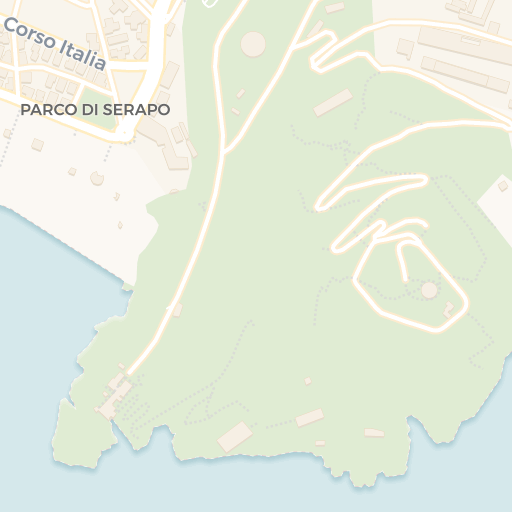
The mausoleum stands on Monte Orlando, the headland above Gaeta, inside the Parco Regionale Urbano di Monte Orlando. It is the park, not a museum, that governs access: the area was placed under protection by Regional Laws 47 of 22 October 1986 and 17 of 31 December 2016, following petitions from environmental associations and local citizens, and it is managed by the Ente Parco Regionale Riviera di Ulisse.
The Regione Lazio protected-areas portal describes the mausoleum as perfectly preserved and lists it among the Roman archaeological remains clearly visible inside the park, alongside the later military works -- ammunition stores and gun emplacements -- that also survive on the headland.
No admission price is published, which is what you would expect for a monument standing on open parkland rather than inside a ticketed museum. The four cells inside hold an antiquarium, so check with the park authority whether the interior is open on the day you plan to go.
Treat this as a walk. The monument is on a mountain above the town, the park is an urban protected area woven into Gaeta itself, and the obvious way to reach it is on foot from the town rather than by driving to the door. The sea below the cliffs is used for diving, which is a separate outing.
Verified against Regione Lazio -- Aree Naturali Protette, October 2026.
When to visit
Spring and autumn are the sensible choices, for the same reason they are at every coastal Lazio headland: the walk up Monte Orlando is the visit, and it is exposed. Gaeta is on the Tyrrhenian coast, so summer midday on an open hillside is hard work for a building you will be inside for twenty minutes.
The inscription is the thing to time. It sits above the door in a frame, and it reads best with light falling on the panel rather than against it -- so morning or late afternoon rather than flat overhead sun.
Because the monument stands inside a regional park rather than a museum, its own opening is tied to the park and to whether the antiquarium in the four cells is staffed. Out of season, assume you may see the exterior and the inscription but not the interior, and ask the park authority before travelling if the antiquarium is the reason you are coming.
If you are combining it with the rest of Monte Orlando -- the other Roman remains, the military works, the cliffs -- give the headland a half day in cool weather rather than an hour in August.