

Montagna Spaccata and the Grotta del Turco
Last updated on October 8, 2026Why visit Montagna Spaccata and the Grotta del Turco
The cliff on the seaward side of Monte Orlando at Gaeta is split by two vertical fissures, side by side, dropping straight into the water. One of them is the Grotta del Turco. The other has a sixteenth-century chapel built inside it, on a boulder that fell from above in 1434 and jammed between the walls. The park authority is blunt about what caused the cleft: it is a fault, a rupture of the rock with movement of the parts -- the mechanism that also makes earthquakes -- which is a slightly better story than the devotional one it replaced.
Visit if you:
- want a church wedged into a crack in a sea cliff, reached by a staircase cut into the fissure
- like geology you can stand inside -- the walls here are Cretaceous carbonate, laid down in a shallow sea like the Bahamas platform
- are interested in how a place accumulates legends and how an authority handles them
- are a birdwatcher: the promontory is a staging post on the migration routes, and the cliffs hold peregrines
Skip it if you:
- cannot manage long flights of steps in a confined rock cleft -- that is the whole visit
- are expecting to reach the sea inside the grotto: the staircase that once went down to the water was shortened for safety
- want a big monument. The church is a single-nave Baroque interior; the subject here is the rock
Quick facts
- Type: Nature, Sacred Place, Canyon
- Local name: Montagna Spaccata e la Grotta del Turco (vedi la pagina italiana)
- Visitor access: Open to visitors
- Admission: Free
- Architectural style: Baroque
Visit responsibly
The site is a fault in a sea cliff above Gaeta, and the park authority maintains a published register of areas at risk of landslide inside Monte Orlando. Rockfall here is not hypothetical: the Cappella del Crocifisso is built on a block that fell off the ridge in 1434. Signed closures and barriers on the cliff paths are the authority acting on its own surveys.
The staircase to the Grotta del Turco was shortened for safety, which means the part that is gone is gone for a reason. Going beyond where the route ends puts a person below a rock face the park has assessed.
The cliff vegetation is the fragile thing and its fragility is specific. The dwarf palms here are the last of a continental European native population to have escaped being dug up for private gardens, and Asplenium petrarchae, an extraordinarily rare fern, lives in fissures small enough that a boot finds them before an eye does. Neither grows back.
The cliffs hold peregrines and a resident population that uses them precisely because people cannot reach them. The sea below, out to bottoms deeper than 30 metres, is part of the protected area -- 30 of the park's 89 hectares are marine.
This is also a working sanctuary run by the P.I.M.E. missionaries, open without charge. Free admission is a decision somebody makes and keeps making.
Where it is
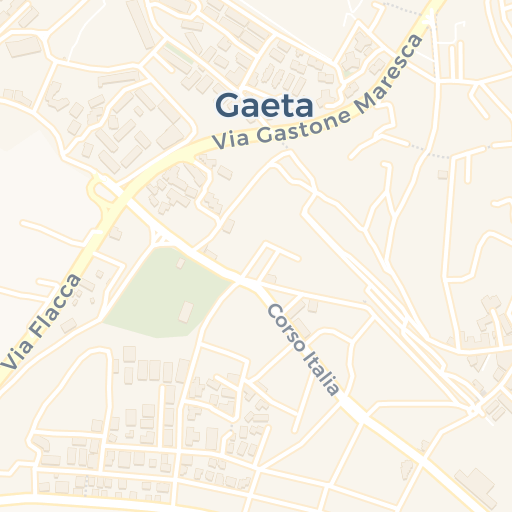
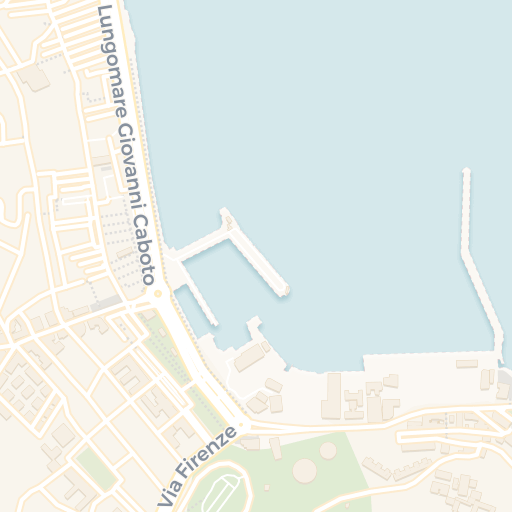
Get directions Open in Apple Maps
© OpenStreetMap contributors · © CARTO · 41.21667, 13.56667
Plan your visit
Admission: Free
The sanctuary is held by the missionaries of P.I.M.E. and, in the words of Regione Lazio's park authority, is freely visitable -- there is no admission charge. It stands on the western side of Monte Orlando, in the Serapo quarter of Gaeta, inside the Parco Regionale Urbano di Monte Orlando: 59 hectares of land and 30 of sea, managed by the Ente Parco Riviera di Ulisse at Via della Breccia 5, 04024 Gaeta (LT), telephone 0771 743070.
Plan for stairs. A staircase descends into the fissure to the Cappella del Crocifisso, and a separate descent reaches the Grotta del Turco; the latter once continued to sea level and was shortened for safety, so the water is no longer reached on foot. The park authority runs guided canoe trips to the grotto for anyone who wants it from the sea, and diving is possible off the cliffs.
Two things to look for on the way down: the Latin distich on the right-hand wall, and the Mano del Turco beside it. The park also flags areas at risk of rockfall within Monte Orlando, so signed closures on the cliff paths are to be taken at face value. The Mausoleum of Lucius Munatius Plancus stands at the top of the same promontory, 168 m up, and the Sentiero delle Falesie links the sanctuary to the park's powder magazines.
Verified against Regione Lazio -- Aree Naturali Protette, October 2026.
When to visit
Spring and autumn, and for a specific reason: those are the passage seasons, when the promontory fills with migrating birds -- herons, honey buzzards, kestrels, bee-eaters, hoopoes, kites, harriers and even storks over the cliffs. The park names them as the most notable thing about the site's fauna. Autumn also brings the one European orchid that flowers out of season, Spiranthes spiralis, on the gariga of the south slope.
Inside the cleft the variable is light rather than temperature. The Grotta del Turco is worth timing: it ends directly in the sea and the whole effect is the reflection the waves throw on the walls, which needs sun on the water and so works better in the brighter half of the day. Gaeta's summers are hot, dry and rain-free, and Serapo's beaches are busy with visitors from both Rome and Naples -- the sanctuary is at its quietest outside July and August. The staircases are shaded and cool whatever the season.