

Sanctuary of Greccio
Last updated on October 9, 2026Why visit Sanctuary of Greccio
This is where the Christmas crib was invented. On Christmas Eve 1223 Francis of Assisi staged a living re-enactment of the Nativity at a grotto above Greccio, and the practice spread from here through the whole Christian world -- which is why the place is nicknamed the Franciscan Bethlehem. The grotto is still there, with a chapel built around it, and a 1409 fresco above the altar shows both nativities side by side: Bethlehem on the right, Greccio on the left, with Francis kneeling in a deacon's vestments and the villagers watching behind him.
It is also the best preserved of the four sanctuaries of the Rieti Valle Santa, and the only one that already had buildings for friars while Francis was alive. You can walk through the rooms they used -- a refectory with the drain channel still in the floor, a dormitory seven metres by two, and the bare rock cell where Francis slept -- then up to a wooden dormitory of fifteen cells used from about 1260 until 1915.
The friction is the approach. The sanctuary is wedged into the cliff like an eagle's nest at 665 m, two kilometres above the village, and the traditional way in is a long stairway cut into the rock from the car park. The buildings then stack over several levels. If stairs are a problem, this is a hard visit.
Visit if you:
- want to stand in the place the nativity scene began
- are walking the Cammino di Francesco or the Via di Francesco
- care about early Franciscan history in rooms the first friars actually used
- want a cliff-edge belvedere over the whole Valle Santa
Skip it if you:
- cannot manage a long rock-cut stairway and several levels of steps
- expect a grand church -- the heart of this place is a cave
- are coming only for the Christmas displays outside the season
Quick facts
- Type: Sacred Place, Monastery, Historic Place
- Local name: Santuario di Greccio (vedi la pagina italiana)
- Built: Grotto settled in the early 1200s; church enclosing it 1228-1229; present church 1959
- Built by: Francis of Assisi and the Franciscan community, on land of Giovanni Velita
- Built for: A Franciscan hermitage grown around the grotto where Francis lived
- Designed by: Church of the Immacolata Concezione by Alberto Carlo Carpiceci
- Architectural style: Franciscan rock hermitage built up against the cliff over seven centuries
- Elevation: 665 m
- Where the crib began: Francis staged the first living Nativity here on Christmas Eve 1223
- Valle Santa sanctuaries: The oldest and best known of the four, with Fonte Colombo, La Foresta and Poggio Bustone
Visit responsibly
The sanctuary is small, old and soft. The heart of it is a cave with an altar and a couple of seats, reached through a chapel; the first friars' quarters are a refectory, a seven-by-two-metre dormitory and a cell hollowed out of rock; the San Bonaventura dormitory is made entirely of wood and was in use until 1915. None of this takes a crowd well. Go quietly, keep groups small inside, and do not photograph with flash near the 1409 lunette or the 14th-century frescoes in the corridor.
Two places are closed and should stay closed: the grotto where Blessed Giovanni da Parma lived in penance from 1257 to 1289, and Francis's own cell, now an oratory holding an 18th-century fresco and the remains of an older one. They are in the woods just outside the sanctuary and they are not open to the public. Do not go looking for a way in.
Arriving by coach is the pressure the municipality has actually measured and acted on: since 2014 tourist buses have had to buy an entry ticket for the sanctuary area and the town. Pay it at the tourist office rather than trying to avoid it, and if you can come by car or on foot from the village instead, that is two kilometres of road the sanctuary does not have to absorb.
This is a working Franciscan sanctuary on a pilgrim route, not a museum of itself. Dress for a church, and give way to people who have walked here.
Where it is

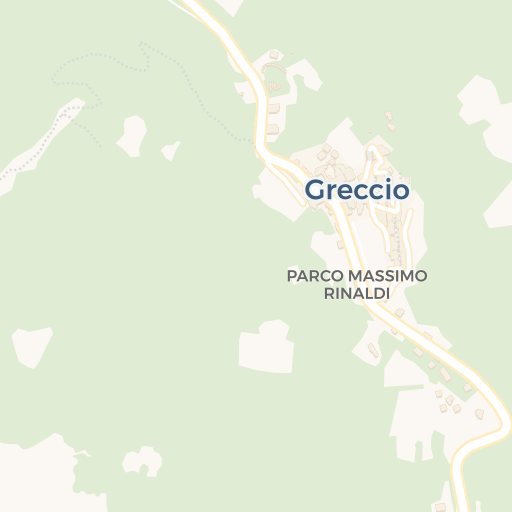
Get directions Open in Apple Maps
© OpenStreetMap contributors · © CARTO · 42.44861, 12.7425
Plan your visit
The sanctuary stands at 665 m in the Monti Sabini, two kilometres from the village of Greccio and about 15 km from Rieti, and is reached along the provincial road SP 1c. The car park, a bar and an information point sit two hairpins below it; from there the traditional way up is a long stairway cut into the rock.
The Comune di Greccio puts its Ufficio Turistico at Piazzale dei Tre Compagni, directly below the Santuario Francescano del Presepio, on 0746 750640. The comune itself answers on 0746 750591 and the Museo Internazionale del Presepe on 0746 740028.
Tourist coaches must pay a municipal entry ticket for the Santuario Francescano area and for Greccio town, an obligation introduced by Consiglio Comunale deliberation n. 34 of 08.09.2014 and paid at the Ufficio Turistico. Groups arriving by coach should budget for it.
No opening hours or admission price is quoted here. The sanctuary is run by Franciscan friars who publish no site that could be reached when this page was written, and the comune posts the museum's hours and ticket costs only as downloadable PDFs. Telephone the tourist office before travelling if your visit depends on a time.
Two things are closed: the grotto of Blessed Giovanni da Parma and Francis's own hermit cell, in the woods outside the sanctuary, are not open to the public. The buildings themselves run over several levels and the approach is a rock-cut stair, so this is not a step-free visit.
Verified against Comune di Greccio, October 2026.
When to visit
Christmas is the obvious answer and the complicated one. This is where the crib was invented, the modern church holds a growing permanent exhibition of nativity scenes, and the village stages a living nativity -- so the days around Christmas are when the place is most itself and most crowded. Greccio is also on the Cammino di Francesco and the Via di Francesco, which brings walkers through in the mild months.
For the buildings rather than the season, come in spring or autumn. The sanctuary is at 665 m on a north-facing cliff in the Monti Sabini: summer is bearable, winter is cold and the rock-cut stair is exposed. The belvedere over the Valle Santa is the one view worth timing, and it reads best in clear morning light.
If you intend to walk up to the chapel on Monte Lacerone, at 1204 m, treat that as a separate undertaking -- a couple of kilometres of rough path through woodland from the sanctuary, and not a winter outing.