

Chiaia di Luna
Last updated on October 9, 2026Why visit Chiaia di Luna
Chiaia di Luna is the one everybody photographs and almost nobody stands on. It is the largest inlet on Ponza: a thin crescent of sand at the foot of a tufa wall several hundred metres long, so sheer and so pale that the whole bay reads as a single curved cut in the island. A Roman tunnel of the Augustan age, driven straight through the tufa, once brought you here on foot from the port.
The friction is absolute rather than a matter of effort: the beach is closed. The cliff above it sheds rock, people sunbathing below have been killed, steel cable netting has been strung across the face, and the Roman tunnel is shut too because its brickwork is collapsing. What remains is the bay seen from the water or from the clifftop, which is in fact how the shape of it reads best.
So come for the view and plan it as a boat trip. Rounding Capo Bianco by sea gives you the crescent, the cliff and the Grotta della Maga Circe -- the cave between the cape and the beach that tradition makes Circe's winter home -- in one pass, and boats are the only way to reach most of Ponza's caves in any case.
Visit if you:
- are circling Ponza by boat and want its single most dramatic coastal view
- are interested in Roman engineering, even seen from outside a closed tunnel
- want to understand how a volcanic island is built, in one cross-section
Skip it if you:
- are expecting to swim or sunbathe here -- you cannot
- want a beach day on Ponza; go to Frontone, Santa Maria or Le Forna instead
- are unwilling to take a boat, since the land approach is shut
Quick facts
- Type: Beach, Nature
- Local name: Chiaia di Luna (vedi la pagina italiana)
- Built: The Roman access tunnel dates from the Augustan age
- Built for: A Roman gallery cut through the tufa to reach the beach from the port of Ponza
- Access: Closed -- beach and Roman tunnel both interdicted after fatal rockfalls
- The bay: Ponza's largest inlet, between Punta del Fieno and Punta di Capo Bianco
Visit responsibly
The first responsibility here is simple: do not try to get onto the beach. It is closed because the cliff above it kills people -- tourists sunbathing on the sand have been killed by falling rock, and the steel cable netting on the face was installed in response. The Roman tunnel is closed for the same family of reasons, with its 2,100-year-old brickwork failing. Several other Ponza beaches are shut on the same grounds, and the Grotta di Serpente is largely blocked off for safety. A closure on this island is not bureaucratic caution.
The Roman gallery deserves particular care because it has already been damaged by people who should have known better. A few years ago engineers working on the ancient Roman tunnel between the harbour and Santa Maria used explosives to dig a nearby conduit when they were supposed to use a chisel, and the shock shattered a 2,100-year-old Roman gallery. It was repaired with steel-reinforced concrete in place of Roman brick, and residents say it no longer looks as it did. That is what carelessness costs here.
Ponza's ecology is fragile enough that the state has intervened twice. Four mines at the northern end were closed in 1975 by the Italian Environmental Protection Agency because the operation was destroying endangered wildlife and flora, and a planned airstrip was cancelled over environmental concerns. Visiting by boat and seaplane rather than demanding an airport is the bargain the island has already made; keep to it, anchor where you are told to, and take nothing off the cliffs.
The island's own community is thinning -- original inhabitants are leaving, children move away and do not return, and severe restrictions on commercial fishing have pushed the local economy down. Spending money with island operators rather than arriving self-contained on a day boat is the difference between being a visitor and being weather.
Where it is
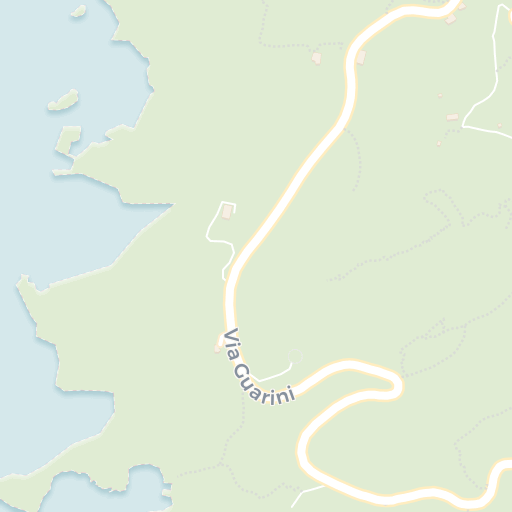
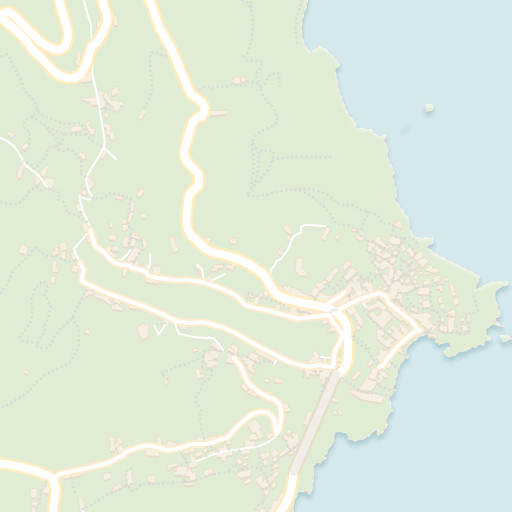
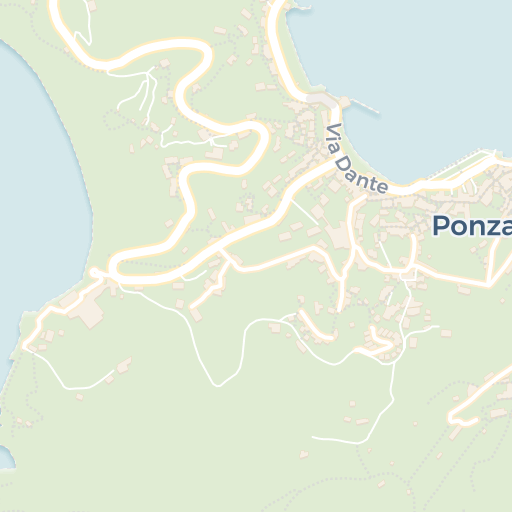
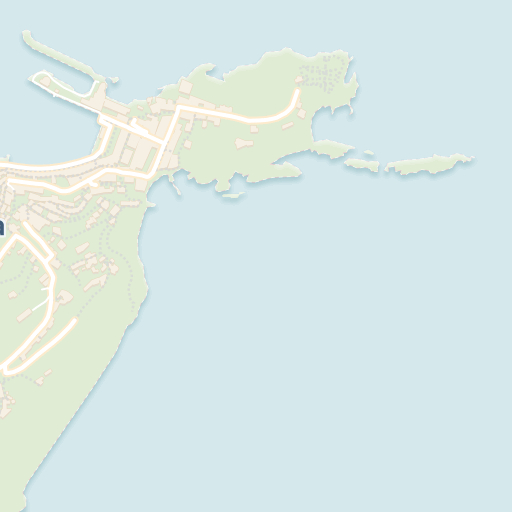
Get directions Open in Apple Maps
© OpenStreetMap contributors · © CARTO · 40.89306, 12.955
Plan your visit
The beach is closed and so is the tunnel that led to it. Chiaia di Luna is described by both available sources as interdicted: the Italian article attributes the closure to the instability of the steep cliff and a rockfall that killed a tourist in 2001, and the English article calls it permanently closed because of falling rocks from the collapsing cliff above, after tourists were killed while sunbathing. The Roman gallery that connected the beach to the road is also closed, its Roman brickwork collapsing. Steel cable netting has been installed on the face.
Plan to see it from a boat. That is the only remaining way to take in the bay, and the same trip covers the Grotta della Maga Circe between Capo Bianco and the beach and the Grotta di Ulisse o del Sangue beyond -- both reachable by boat only.
Getting to Ponza: ferries run from Naples, Terracina, Formia and Anzio, and hydrofoils from Anzio and Formia take about 75 minutes. Neither sails in severe weather, so build slack into a day trip. There is no airstrip; a planned one was cancelled on environmental grounds and seaplanes call instead. On the island a single two-lane road runs north to south, suitable for small cars only, with a bus along its length.
Verify the current position with the Comune di Ponza before relying on any of this. The comune maintains a register of dangerous and interdicted areas and issues seasonal reopening orders for individual coves -- Piscine Naturali, Cala Cecata, Cala Feola, Cala Fonte and Frontone all have them. No order for Chiaia di Luna appears there, and the comune's two general danger-zone ordinances are published as scanned documents that could not be read when this page was written. The comune is reachable at Piazza Carlo Pisacane 4, 04027 Ponza, on 0771 80108.
If you want a beach day on Ponza, go elsewhere: Frontone, Santa Maria, Le Forna and Spiaggia delle Felci are all named as beaches, and Le Forna has a natural saltwater swimming pool.
Verified against Comune di Ponza, October 2026.
When to visit
Because this is now a view rather than a beach, the question is when the boats run and when the light is right, not when the sand is warm.
Ponza has a Mediterranean climate with hot dry summers and mild rainy winters. The annual average is 17.14 °C; August is the warmest month at 25.48 °C and February the coldest at 10.36 °C. Rainfall totals 627.21 mm a year, concentrated in November with 116.7 mm, while July is nearly dry at 9.13 mm. That makes late spring and September the comfortable window -- settled enough for boat trips, short of the August crush.
Sea state matters more than season. Ferries and hydrofoils from Anzio, Formia, Naples and Terracina do not sail in severe weather, and a boat trip round the west coast to see the bay is the first thing cancelled when the swell gets up. The crossing from Anzio or Formia takes about 75 minutes.
The bay faces west. Late afternoon light runs along the cliff rather than flattening it, which is when the crescent and the layering in the tufa read best from the water.