

Piazza and Palazzo del Quirinale
Last updated on October 5, 2026Why visit Piazza and Palazzo del Quirinale
The draw
It is the sixth largest palace in the world and you can stand at its door for nothing. 110,500 square metres — twenty times bigger than the White House — built by Domenico Fontana, Carlo Maderno and Gian Lorenzo Bernini, who made here the Loggia delle Benedizioni.
Three regimes have lived in it in turn. For over three centuries the summer residence of the popes, then the home of the kings of Italy, and since 1946 the seat of the Presidency of the Republic — what Turismo Roma calls the symbol-place of the life of the Italian Republic.
The collections are not a palace's leftovers. Ancient and modern statues and paintings, tapestries of inestimable value, carriages of fine manufacture, precious clocks whose oldest examples go back to the age of Louis XIV, and a porcelain collection of about 38,000 pieces that can be considered among the most prestigious internationally. Since , "Quirinale Contemporaneo" has placed hundreds of paintings, sculptures and installations by the great names of the twentieth century permanently in the courtyards, halls and gardens.
And the square outside is a monument by itself. The colossal Dioscuri, Castor and Pollux, Roman imperial reworkings of a Greek original of the 5th century BC, which came from the Temple of Serapis built by Caracalla in 217 AD; and Palazzo della Consulta, erected in 1732 by Ferdinando Fuga and now the Constitutional Court.
The friction
- No opening hours are published. Turismo Roma says only to check the calendar of visits on the official site.
- No price is published either.
- It is a working seat of state. Access follows a calendar, not a timetable, and is not guaranteed on any given day.
- It is on the highest of the seven hills. Every approach is uphill.
The tactic
Check palazzo.quirinale.it before anything else. That is the city's own instruction, and there is no published fallback.
Come on a Sunday whether or not you get inside. The changing of the guard is performed every Sunday by the Corazzieri — one of the most prestigious and spectacular armed escorts in the world — with the band of the Guardia di Finanza. It is one of the most awaited moments for tourists and residents alike, it is in the open square, and it costs nothing.
If you do get in, give the gardens their time. About 4 hectares, going back to the 16th century, with geometric beds, a rich collection of tree species, high hedges and a dense wood with broad avenues and pergolas; at one of the panoramic points stands the Coffee House by Ferdinando Fuga, from whose terrace you look at the 16th-century Fontana dell'Organo, whose mechanism — though modernised — still works perfectly.
Look for the twentieth century, not only the baroque. Quirinale Contemporaneo put de Chirico, Lucio Fontana, Pomodoro, Manzù, Afro, Burri, Accardi, Fioroni, Pistoletto, Pascali and Rotella into these rooms permanently, with wide space given to design — Gio Ponti, Fornasetti, Albini, the Castiglioni brothers, Magistretti, Mollino, Gae Aulenti, Gaetano Pesce, Mendini, Cini Boeri, Paola Navone.
Read the square as a constitutional map. The Presidency on one side, the Constitutional Court on the other: two of the Republic's institutions facing each other across an obelisk.
Skip it if you:
- Cannot plan around a published calendar. There are no walk-in hours.
- Want a quick look. The palace visit is a long one, and the square is a climb.
- Expect a museum. This is the head of state's residence first.
Quick facts
- Type: Palace, Historic Place, Square/Plazza, Building
- Local name: Piazza e Palazzo del Quirinale (vedi la pagina italiana)
- Built: Seat of the Presidency of the Republic since <time datetime="1946">1946</time>; Palazzo della Consulta erected <time datetime="1732">1732</time>
- Built by: Domenico Fontana, Carlo Maderno and Gian Lorenzo Bernini
- Built for: Over three centuries as the summer residence of the popes, then the home of the kings of Italy
- Architectural style: Roman baroque, with Bernini's Loggia delle Benedizioni
- Twenty times the White House: At 110,500 square metres it is the sixth largest palace in the world, twenty times bigger than the White House.
- The guard changes every Sunday: The Corazzieri perform it with the band of the Guardia di Finanza — one of the most prestigious and spectacular armed escorts in the world.
Visit responsibly
This is somebody's workplace and the head of state's residence. It has been the seat of the Presidency of the Republic since 1946 and is the symbol-place of the life of the Italian Republic. Access runs on a published calendar precisely because the building is in use.
The Corazzieri on the square are on duty, not on display. The city describes them as one of the most prestigious and spectacular armed escorts in the world, and the Sunday changing of the guard is a ceremony with a function — worth watching from where you are asked to stand.
The square is shared with another institution. Palazzo della Consulta on the right side is the Constitutional Court. Two of the Republic's organs face each other here.
The collections are irreplaceable and often fragile. Tapestries of inestimable value, precious clocks going back to the age of Louis XIV and about 38,000 pieces of porcelain are not museum stock that can be replaced; the restrictions on bags, touch and photography exist for them.
The Dioscuri are ancient and twice relocated. They are Roman imperial reworkings of a 5th-century BC Greek original, brought here from the Temple of Serapis built by Caracalla in 217 AD — open-air marble with eighteen centuries of weathering already behind it.
And the gardens are a living collection. Four hectares with a rich collection of tree species, tended beds and a wood: paths and planting are the point, and keeping to the former protects the latter.
Where it is
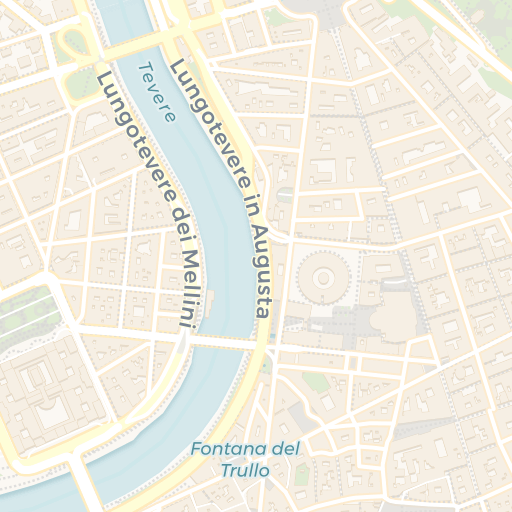
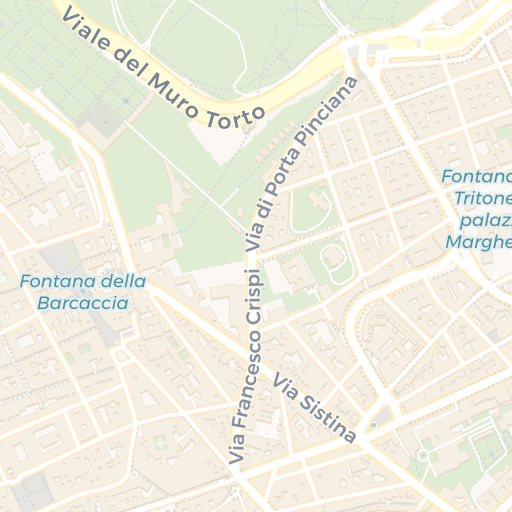
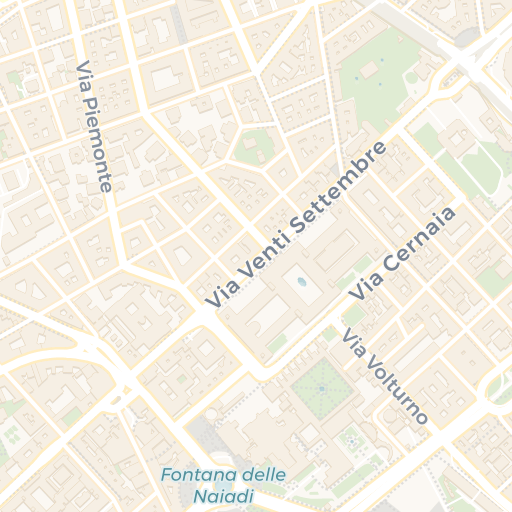
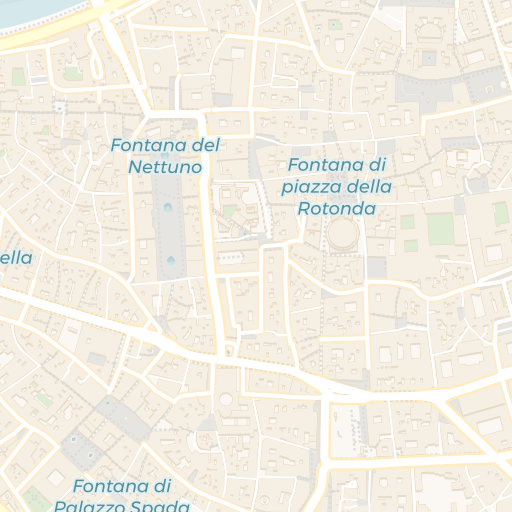
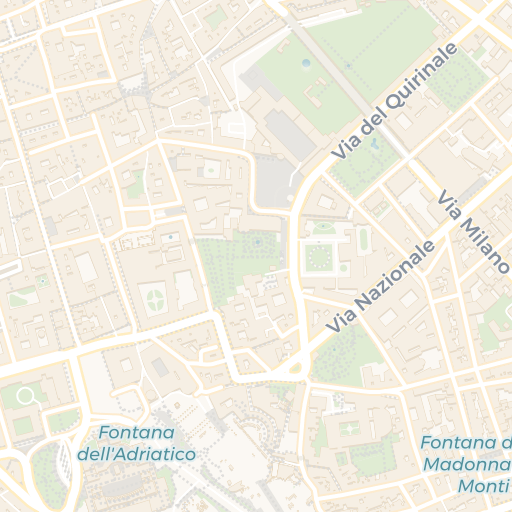
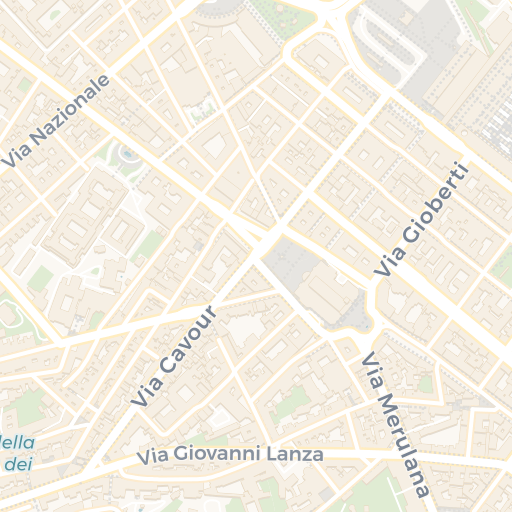
Get directions Open in Apple Maps
© OpenStreetMap contributors · © CARTO · 41.8992, 12.4863
Plan your visit
The piazza is free; the palace runs on a calendar
No opening hours are published. Turismo Roma gives a single instruction: check the calendar of visits on the official site, palazzo.quirinale.it. This is a working seat of state — the seat of the Presidency of the Republic since 1946 — not a museum with a timetable.
No price is published either, so no figure is quoted here. Main site www.quirinale.it; telephone 06 42012191.
The one dated public event
The changing of the guard is performed every Sunday by the Corazzieri — which Turismo Roma calls one of the most prestigious and spectacular armed escorts in the world — with the musical accompaniment of the band of the Guardia di Finanza. It is in the open square, and it is one of the most awaited moments for tourists and citizens alike.
What the square gives you for nothing
- The colossal Dioscuri, from the Temple of Serapis built by Caracalla in 217 AD.
- The facade of the Palazzo del Quirinale, 110,500 square metres behind it.
- Palazzo della Consulta, 1732, Ferdinando Fuga, now the Constitutional Court.
- The summit of the Quirinal, the highest of the seven hills.
What a visit inside covers
The art collections — ancient and modern statues and paintings, tapestries of inestimable value, carriages, precious clocks from the age of Louis XIV onward, about 38,000 pieces of porcelain — the Quirinale Contemporaneo works installed since 2019, and the 4 hectares of 16th-century gardens with the Coffee House and the Fontana dell'Organo.
Ticket & Pass Decision Matrix
| Option | Cost | What it gets you | Booking | Verdict |
|---|---|---|---|---|
| The piazza | Free | The Dioscuri, the obelisk, both palace facades, the view off the highest of the seven hills | None | Always available, and more than most visitors realise. |
| Sunday changing of the guard | Free | The Corazzieri with the band of the Guardia di Finanza | None | The one thing you can actually put in a diary. |
| A visit inside | Not published by the city | The collections, the Bernini loggia, the state rooms | Via the calendar at palazzo.quirinale.it | Plan it first or not at all — there is no walk-up option published. |
| The gardens | Not published | 4 hectares, the Coffee House, the Fontana dell'Organo | Same calendar | Check whether the date you want includes them; they are the best of it. |
Verified against Turismo Roma, October 2026.
When to visit
Sunday, for the thing that is actually scheduled. The changing of the guard is performed every Sunday by the Corazzieri with the band of the Guardia di Finanza, in the open square and at no cost.
For anything else, the calendar decides. Turismo Roma publishes no hours and tells visitors to check the calendar of visits on the official site — so the date is chosen for you, not by you.
Late afternoon suits the square. It stands on the summit of the Quirinal, the highest of the seven hills, open towards the city, and the long palace front takes low light well.
Spring for the gardens, if your date includes them. Four hectares of 16th-century planting with geometric beds, a rich collection of tree species, high hedges and a dense wood with pergolas is a seasonal attraction, not a year-round one.
Expect a climb whenever you come. This is the highest of Rome's hills, and there is no approach that is not uphill.