

Caetani Castle
Last updated on October 8, 2026Why visit Caetani Castle
Five rings of walls, a keep you could cut loose from the rest of the castle by raising two wooden drawbridges, and outer walls over three metres thick resting on living rock. The Castello Caetani at Sermoneta was built as a military machine at the strategic point between Rome and Naples, and then the Borgias took it: Alexander VI excommunicated the Caetani in 1492, confiscated everything in 1500 and handed it to Cesare and Lucrezia, who had Antonio da Sangallo add to the fortifications. Lucrezia Borgia lived here. So, at other times, did Frederick II, Charles V and two popes, and the inscriptions they left are still on a wall inside.
Visit if you:
- want to understand how a keep actually worked -- this one was designed to be isolated from its own castle
- are interested in the Borgias as landlords rather than as legend
- like frescoes in unexpected places: two of the Camere Pinte are painted by someone from Pinturicchio's circle
- are combining it with the Giardino di Ninfa below, which the same foundation runs
Skip it if you:
- cannot book: entry at Sermoneta is by guided visit in timed slots only, bought in advance, and there is no walk-in wandering
- are travelling on a Monday, the weekly closing day
- are expecting a furnished palace -- Napoleon's soldiers sacked it in 1798, turned it into a prison and carried off 36 cannon
Quick facts
- Type: Castle, Historic Place
- Local name: Castello Caetani (vedi la pagina italiana)
- Visitor access: Guided tours only
- Architectural style: Medieval military
Visit responsibly
The Fondazione Roffredo Caetani is explicit that the entry contribution is what pays for the upkeep and the care of the Castello Caetani. This is not a state site with a budget behind it: it came to the foundation in 1977 from the last descendant of the family, and the visitor contribution is the maintenance fund.
Guided visits in timed slots are the conservation mechanism as much as the business model. A thirteenth-century keep reached across former drawbridge openings, with painted rooms of the Pinturicchio school in it, cannot take free circulation, and the group sizes and the slots are what keep the numbers inside the building bounded.
The Camere Pinte are the fragile part: two of the three guest rooms carry frescoes by an unknown hand of Pinturicchio's circle, restored only at the end of the 1990s. And one wall of the complex preserves the inscriptions left by distinguished visitors over the centuries -- graffiti that became the record, and the clearest possible argument against adding to it.
Sermoneta is a small walled hill town that the castle brings people to. Eating and buying inside the walls rather than driving up and straight back down is what the town gets out of the visit.
Where it is
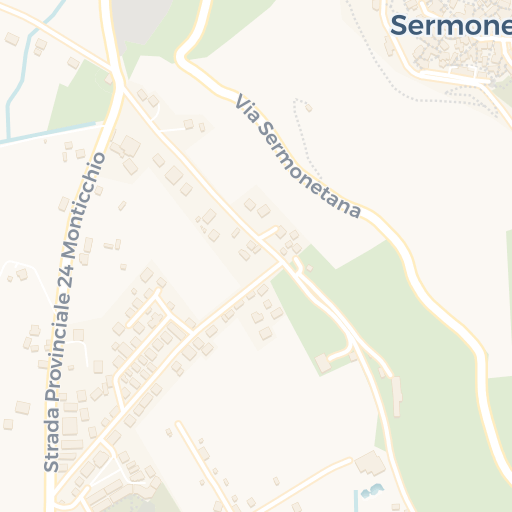
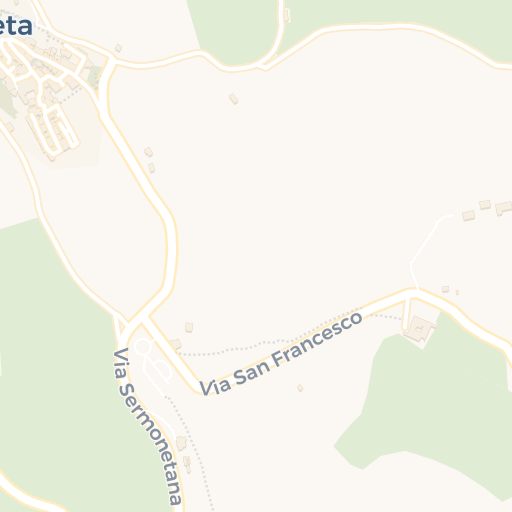
Get directions Open in Apple Maps
© OpenStreetMap contributors · © CARTO · 41.55, 12.98333
Plan your visit
The Castello Caetani at Sermoneta belongs to the Fondazione Roffredo Caetani and is open to the public. Entry is by guided visit only, on the days and in the time slots the foundation publishes, and the entry contribution is bought in advance through the Giardino di Ninfa shop. For a private group visit outside those days, the foundation asks for an email to castello@frcaetani.it.
The contribution is 8 euro a person for individuals, plus 0.25 euro for online presale; 6 euro a person for a disabled visitor with a companion; and free for children under 12 accompanied by a parent. A disabled visitor with a companion may buy at the castle itself, with no need to book a time slot. Organised groups of at least 25 may visit at any time of year, except on Mondays, the weekly closing day. The castle closes an hour after the ticket office. (Prices and rules as published by the foundation on 8 October 2026 -- confirm before travelling.)
Verified against Fondazione Roffredo Caetani, October 2026.
When to visit
The Castello Caetani is open year-round but on published days and in timed slots, so at Sermoneta the question is always which days rather than which season -- check the foundation's calendar before fixing anything, and avoid Mondays, the weekly closing day. Organised groups of 25 or more can book at any time of year, Mondays excepted. April to June and September to October are the pleasant months on the hill, and they are also when the Giardino di Ninfa below is worth pairing with the castle, since the same foundation runs both and Ninfa has its own restricted opening days. Summer is hot on an exposed hilltop with little shade between the towers; winter is clear and quiet, with long views over the Pontine plain that the haze takes away in August.