

Abbey of Santa Scolastica
Last updated on October 9, 2026Why visit Abbey of Santa Scolastica
Santa Scolastica is the last one standing. Benedict of Nursia founded twelve monasteries in the Subiaco valley in the early 6th century; earthquakes and two Saracen sackings took the rest, and until the end of the 12th century this was the only monastery left in Subiaco. It is still an active Benedictine house, and it gives its name to the Subiaco Congregation -- 64 male monasteries on five continents, with 45 female houses attached.
What makes it worth the climb is that nothing was ever demolished to make room. Three cloisters survive side by side, and they are three different centuries arguing with each other: a Cosmatesque cloister signed by its 13th-century marble-worker, a lopsided six-sided Gothic one built around a well on columns looted from Nero's villa, and a Renaissance court begun in 1580 and not finished until 1689. The church on top of them is neoclassical, because Giacomo Quarenghi recast it in 1769 using Palladio as his model, and it sits oddly against everything underneath -- which is itself the most informative thing about the place.
The friction: this is a working monastery, not a museum, and the most famous Subiaco images -- Benedict's cave, the oldest portrait of St Francis -- are at the Sacro Speco, a separate monastery a few kilometres away. Do both, in that order, and leave the afternoon free.
Visit if you:
- want to see Western monasticism at the place it started
- read buildings, and want five centuries of cloister side by side
- are already going to the Sacro Speco and have half a day
- value a site that is lived in rather than curated
Skip it if you:
- are looking for Benedict's cave itself, which is at the other monastery
- need a short, level visit -- the abbey sits at 510 m east of the town
- want a museum with interpretation at every turn
Quick facts
- Type: Monastery, Sacred Place, Historic Place
- Local name: Abbazia di Santa Scolastica (vedi la pagina italiana)
- Built: Founded about 520; church consecrated 980, rebuilt 1300, recast from 1769
- Built by: Benedict of Nursia and the Benedictine community
- Built for: A Benedictine monastery -- the only one of the twelve at Subiaco to survive
- Designed by: Cosmati cloister by Jacopo il Vecchio and his son Cosma; church recast by Giacomo Quarenghi
- Architectural style: Cosmatesque, Gothic and Renaissance cloisters under a neoclassical church
- Elevation: 510 m
- The community: Nineteen monks across Santa Scolastica and the Sacro Speco
- Subiaco Congregation: 64 male monasteries on five continents, with 45 female houses
Visit responsibly
People live here. Santa Scolastica is one of two houses sharing a community of nineteen monks, and the cloisters you walk through are their domestic space, not an exhibit with a rope line. Keep your voice down, dress as you would for a church, and do not photograph the monks. If an office is in progress, wait.
Much of what makes the place is fragile and unprotected. The Carrara capitals of the Cosmati cloister are 13th-century carving at hand height, each one different, and they are already second-hand -- salvaged from San Clemente after an earthquake destroyed it. The well parapet in the Gothic cloister stands on columns taken from Nero's villa. None of it is behind glass. Do not touch, lean on or climb the colonnettes and the well.
The abbey has survived two Saracen destructions, an earthquake, a French suppression and a bomb on 23 May 1944 that took out a whole range of the Renaissance cloister. The reconstruction you see on that west side is the measure of how little margin a building like this has. Stay on the walking surfaces, and take nothing -- not a chip of marble, not a tessera.
Staying at the foresteria, or eating there, puts money directly into the community that maintains the buildings rather than into a coach stop in the valley.
Where it is
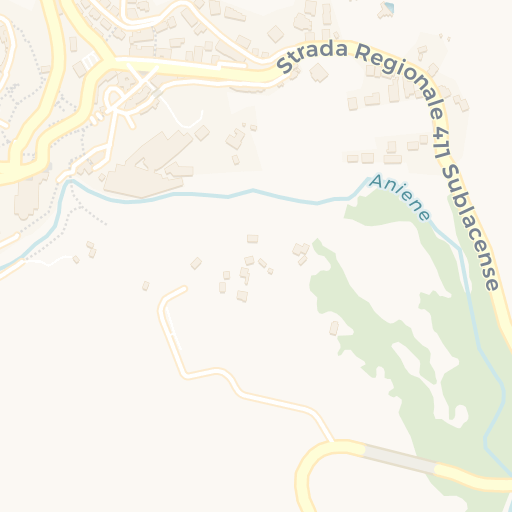
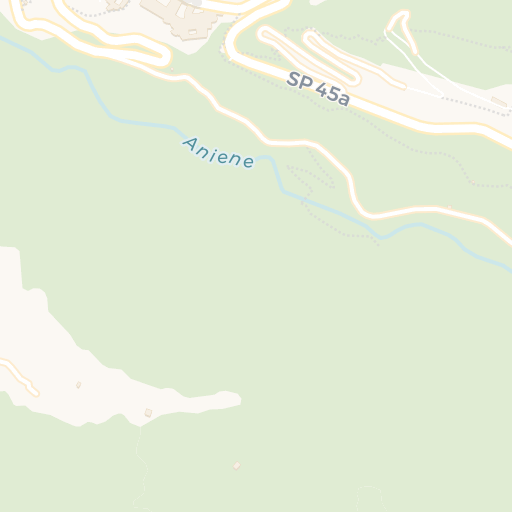
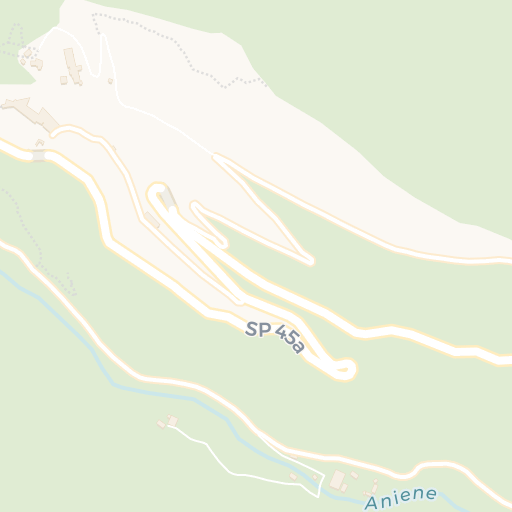
Get directions Open in Apple Maps
© OpenStreetMap contributors · © CARTO · 41.91861, 13.11639
Plan your visit
The Monastero di Santa Scolastica is at Piazzale Santa Scolastica 1, 00028 Subiaco (Roma), east of the town at 510 m. The monastery's own telephone is 0774 82421 and its address for enquiries is monastero@benedettini-subiaco.org. It is a working Benedictine community, not a museum, and it is the community itself that publishes this information.
The monks publish no opening hours and no admission price for the abbey, which is why none is quoted here. Telephone ahead if your visit depends on a particular time, and expect access to the church and cloisters to work around the community's own offices.
The Sacro Speco -- St Benedict's cave, with the frescoes and the oldest portrait of St Francis -- is a separate monastery a few kilometres away, with its own number, 0774 85039. Budget for two stops, not one. Nineteen monks live across the two houses.
There is a foresteria attached to Santa Scolastica, with rooms sleeping one to five and several dining rooms for individuals or groups; it is booked separately on 0774 85569 or at info@foresteria-subiaco.com, and it takes table reservations as well as overnight stays. The abbey library is a state library inside the monastery and answers on 0774 85424.
Verified against Monasteri di Subiaco -- Benedictine community of Santa Scolastica, October 2026.
When to visit
Spring and autumn are the straightforward choices. The abbey is at 510 m in a mountain valley east of Subiaco, so summer is cooler here than on the plain but the approach is still a climb, and winter at this altitude is genuinely cold -- the cloisters are open to the weather and the church is unheated in the way old churches are.
Plan around the community rather than around the crowds. This is an active monastery of a few monks, and access to the church and cloisters works around the daily offices; a telephone call the day before is worth more than any seasonal advice. Pilgrimage traffic concentrates on the Benedictine feasts, which is either the reason to come or the reason to avoid a date, depending on what you want from the visit.
Give yourself the afternoon. Santa Scolastica and the Sacro Speco are separate monasteries a few kilometres apart, and seeing one without the other leaves the story half-told -- the cloisters here, the cave and the frescoes there.