

Church of San Pietro
Last updated on October 8, 2026Why visit Church of San Pietro
San Pietro stands apart from Tuscania on its own hill -- probably the Etruscan acropolis -- with three surviving defensive towers beside it and a grass clearing in front. Its facade is one of the strangest in central Italy: a Cosmatesque rose window with the four Evangelists at its corners, two dragons chasing prey beside it, winged griffons gripping their kill, a zodiac and the labours of the months cut into the portal, and a running or dancing man reused from an Etruscan or Roman relief. How old it is has been argued for a century. If Toesca was right and it is eighth-century, it is the hinge between Early Christian and Romanesque building in Italy; if the recent dating to the eleventh century is right, it is something much less -- and there are no documents to settle it.
Visit if you:
- want Romanesque sculpture that has not been tidied into a scheme
- are interested in a building whose significance depends on a date nobody can establish
- like crypts: this one runs on twenty-eight columns, nearly all of them robbed from Roman or early medieval buildings
- care about reuse -- there is Roman opus reticulatum in the walls and Etruscan sarcophagi in the aisle
Skip it if you:
- are coming for the frescoes: most of the painting is lost, and the apse Pantocrator that dominated the church was destroyed in the 1971 earthquake
- expect the rose window you have seen in photographs -- the one in place is a reconstruction, the original having been destroyed in 1971
- cannot manage steps down to a crypt, which is half of what there is to see here
Quick facts
- Type: Church, Sacred Place, Historic Place
- Local name: Chiesa di San Pietro (vedi la pagina italiana)
- Visitor access: Open to visitors
- Admission: Free
- Architectural style: Lombard-Romanesque
Visit responsibly
The crypt is the pressure point and the operator has put a number on it: no more than 25 people in it at once, and organised groups capped at 20 including the guide. Those are not queue-management figures. It is a low hall on twenty-eight reused columns with fourteenth-century painting on its walls, and the limit exists because of the air and the space.
Almost everything load-bearing in this church was taken from an older one. Twenty-eight columns robbed from Roman and early medieval buildings, Roman opus reticulatum in the crypt walls, Etruscan sarcophagi standing in the left aisle, a Roman or Etruscan relief built into the facade. None of it is behind glass, and the sarcophagi in particular sit where a visitor walks past them.
The painting that survives does so because the rest did not. The 1971 earthquake took the apse Pantocrator and the rose window; what is left of the fresco cycles is fragmentary and at the margins. Flash and touch are what remove fragments.
Tuscania is a small town that sees far fewer visitors than its two Romanesque churches warrant, and entry here costs nothing. Spending the afternoon in the town rather than treating San Pietro as a roadside stop is what keeps a place this size able to host anyone.
Where it is
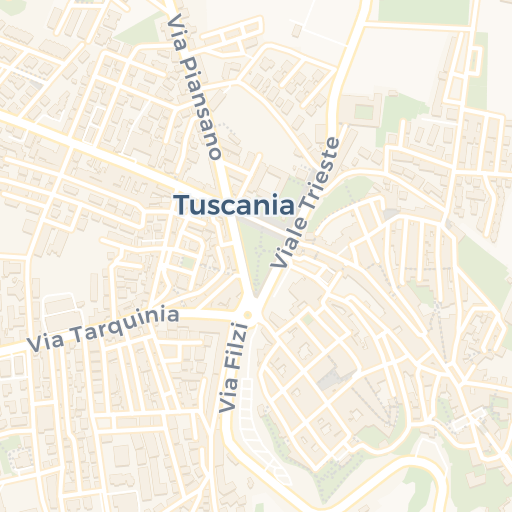
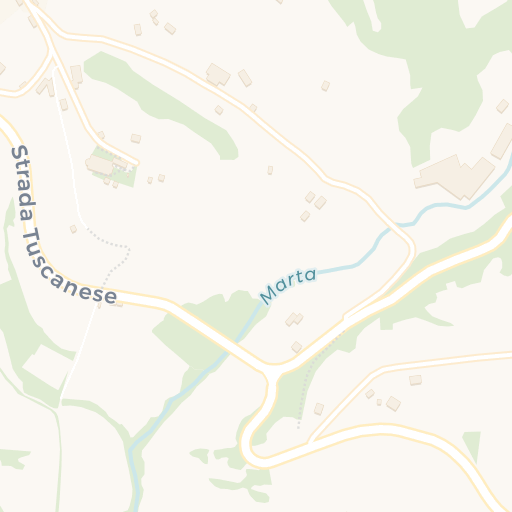
Get directions Open in Apple Maps
© OpenStreetMap contributors · © CARTO · 42.41279, 11.87838
Plan your visit
Admission: Free
San Pietro has been run by the Ministry of Culture since December 2014, through what was the Polo museale del Lazio and became the Direzione regionale Musei in December 2019. Entry is free.
It opens 10.00-13.00 and 15.00-17.00, and closes on Mondays. Booking is always compulsory for groups; a group may not exceed 20 people including the guide, and 25 people may not be in the crypt at the same time. The contact number is 0761 436209. (Hours and rules as published by the operator on 8 October 2026 -- confirm before travelling.)
Verified against Italian Ministry of Culture, October 2026.
When to visit
The church opens 10.00-13.00 and 15.00-17.00 and is closed on Mondays, which is the first thing to plan around -- those are short hours with a long middle-of-the-day gap, and Tuscania is not somewhere to arrive at two o'clock hoping. Entry is free. April to June and September to October are the comfortable months; the facade faces the clearing and takes direct light for much of the day, which is when the zodiac bosses, the griffons and the Evangelists read properly, while the crypt is unaffected by season or weather. Winter is quiet and entirely workable within those hours. Groups should note that booking is compulsory year-round, so a coach arriving unannounced is not getting in.