

Castel Gavone, Finale Ligure
Last updated on October 18, 2026Why visit Castel Gavone, Finale Ligure
Because Genoa blew this castle up and the best part of it survived anyway.
The draw is the Torre dei Diamanti. A tower shaped like a ship's keel, sheathed in diamond-point rustication, added about 1490 by Alfonso I Del Carretto to take artillery fire from the seaward slope — and seemingly designed after Francesco di Giorgio Martini, whom Alfonso is thought to have met in Rome. It is the finest surviving fragment of a castle the Del Carretto held from the twelfth century, and there is a lift inside it to the top.
The friction is that everything around it is wreckage, and you cannot just turn up. Genoese sappers destroyed the castle in 1715, two years after the Republic bought the marquisate, and it stayed destroyed. The comune took it over on 29 December 1989 and ran a first phase of works to conserve and open the ruins — but the operator admits visitors only on a guided visit, with booking compulsory on 019 690 020, and the comune itself publishes nothing.
The smart way is to walk up from Perti and treat the ruin as the point. The castle stands on the Becchignolo spur above Finalborgo, in the frazione of Perti, and the approach is the part that makes sense of it: the outer circuit left unfinished before 1558, the rock spur Gaspare Beretta cut away in 1674 to stop attackers digging in, and Castel San Giovanni below, built in 1643 to deny the slope to enemy guns.
Quick facts
- Type: Castle, Historic Place, Ruins
- Local name: Castel Gavone, Finale Ligure (vedi la pagina italiana)
- Built: A feudal palace from about 1172, fortified 1217; rebuilt 1451-52 after Genoa part-demolished it in 1448; the Torre dei Diamanti about 1490; the outer circuit begun in the 1510s or 1520s and left unfinished before 1558; blown up by Genoa in 1715
- Designed by: Enrico II Del Carretto (1217); Giovanni I Del Carretto (rebuilding, 1451-52); Alfonso I, Giovanni II and Alfonso II Del Carretto (enlargements, inspired by Francesco di Giorgio Martini)
- Architectural style: Transitional military architecture -- a medieval seigneurial castle being rebuilt for artillery; the Torre dei Diamanti is keeled like a ship and faced in diamond-point rustication
Visit responsibly
Treat it as an archaeological site that happens to be a castle. The ruins were stabilised in a first phase of works, not restored, and a consolidated ruin is a fragile one: the masonry on show is original fifteenth- and sixteenth-century work, including the bugnato of the tower.
Stay on the route that was laid for you. The comune's recovery included a visit path through the ruins. Walking off it on a quarried spur — the north flank was deliberately cut away in 1674 and is a drop, not a slope — is the obvious hazard and the obvious damage.
The site is in a lived-in frazione, not a park. Perti is a hill village of the comune, and the walk up passes houses and olive ground. Liguria's oldest Christian evidence was found here, which is the measure of how long the place has been inhabited.
Take the pressure off August. Finale Ligure holds a Bandiera blu renewed since 2007 and is a resort with three distinct busy periods — the beach in August, the mountain bikers in late May and October. A castle on a hill is the one thing in the comune that is easier in the quiet months, and going then is the useful choice.
Where it is
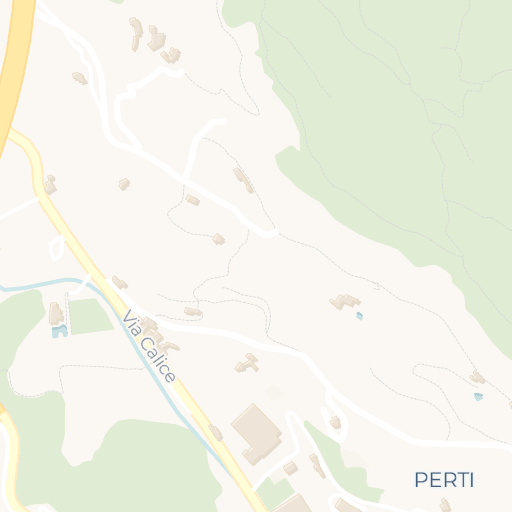
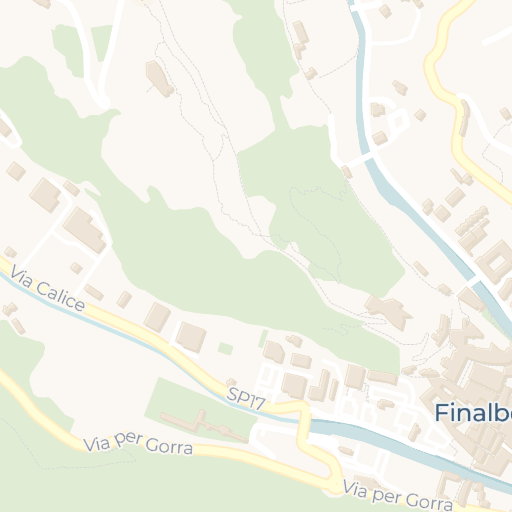
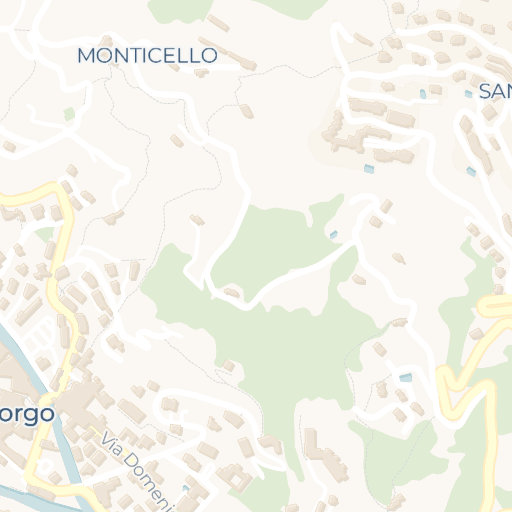
Get directions Open in Apple Maps
© OpenStreetMap contributors · © CARTO · 44.18087, 8.32033
Plan your visit
Guided visit only, and you must book. The Museo Archeologico del Finale runs the visits to Castel Gavone through its MUDIF programme, and states the terms plainly: accessible exclusively with a guided visit, booking compulsory on 019 690 020. There is no turn-up-and-walk-in option published by anyone, and the comune, which owns the castle, publishes nothing at all.
The guide is an archaeologist and the visit is the phases. The tour covers the monument’s development between the Middle Ages and the modern age, the Torre dei Diamanti included — which the operator calls one of the most important examples of Renaissance fortified architecture in Italy. Dates are published as a calendar of events rather than as daily opening hours, so what exists is a schedule to book into, not a door to try.
Book by telephone. The museum takes guided-visit bookings by telephone only: +39 019 690020 or +39 351 730 6191, or info@museoarcheofinale.it. No price for the Castel Gavone visit is published on the pages read for this entry — the museum’s own admission is €5 full and €3 reduced, but that is the museum, not the castle.
Assume a walk and a ruin. The castle stands on the Becchignolo spur above Finalborgo, in the frazione of Perti; a first phase of works made the ruins accessible and put a lift in the Torre dei Diamanti. No path grade, walking time or parking is published for the castle itself. The museum that runs it is down in Finalborgo, at the Chiostri di Santa Caterina, reachable on TPL Linea bus 40 or 40/ — stop Finalborgo Centro, 200 m away — or 1.6 km on foot from Finale Ligure Marina station.
Verified against Museo Archeologico del Finale (MAF) / Museo Diffuso del Finale (MUDIF), October 2026.
When to visit
Spring and autumn, and not the middle of an August afternoon. The approach is a walk up an exposed limestone spur above Perti, and the Finalese is a climbing and mountain-biking district precisely because its rock holds the heat.
October is the best single month, with a caveat. The weather suits the walk and the sea is still warm below; the caveat is that Finale hosts a round of the Enduro World Series in October and the hinterland fills with riders and shuttles. Late May has the same problem from the other direction, with the 24-hour mountain-bike race on the Manie plateau on the last weekend.
August is when Finalborgo below is busiest. La Notte dei Tarocchi runs through the walled borgo on 12 and 13 August and Viaggio nel Medioevo fills four evenings in the third week. The castle above is quieter than the town below on those dates, which is an argument for climbing it.
Winter is mild and the view is better. The ridge between Monte Settepani and Pian dei Corsi, almost always between 1,000 and 1,400 m, blocks the cold air that sits over the Po plain, so the littoral has mild winters. No temperature figure is quoted here: the source gives means for a December-to-February window in a truncated sentence and names no measuring station.