

Fonterutoli
Last updated on October 16, 2026Why visit Fonterutoli
Because the black cockerel on every bottle of Chianti Classico comes from a story set here.
Fonterutoli was the seat of the agreements that ended the dispute over the Chianti territories between Siena and Florence. The legend attached to them says the border would be fixed wherever two knights met, each setting out from his own city at the first crowing of the cock — and that they met near Fonterutoli. The hamlet also carries a plaque to 998, when Otto III settled the contest between the dioceses of Siena, Fiesole and Arezzo.
The friction is that it is small and privately held. Eighty people, one street, and a castle that has belonged to the Mazzei since 1435. The cellar is seen on a booked tour, not walked into.
The smart way is to book first and come for the view. From here you can see Siena and look out over the Sienese Valdelsa — which is the whole point of a border post. Then the gardens, then the wood with the Etruscan tombs in it.
Quick facts
- Type: Historic Place, Neighborhood, Mansion
- Local name: Fonterutoli (vedi la pagina italiana)
- Built: Known to the Etruscans and Romans; the boundary settlement of 998; Mazzei property since 1435, the castle replaced by the villa at the end of the 16th century
- Architectural style: Chianti hamlet with a seigneurial villa and Italian gardens, the church of San Miniato, and a modern gravity-flow cellar
- Elevation: 502 m
Visit responsibly
This is a private hamlet with eighty residents. Fonterutoli is somebody's home and somebody's workplace, continuously in one family's hands since 1435. The lane is not a visitor attraction corridor.
Book rather than arrive. The cellar is seen on arranged visits of fixed length. Turning up expecting to be shown round takes staff off a tasting that other people have paid for.
Treat the gardens as private. The giardini all'italiana belong to the villa.
The wood has Etruscan tombs in it. The necropoli del Poggino is free to visit and entirely unsupervised: stay on the path between the four tombs, climb nothing, and take nothing off the ground.
Buying here keeps the landscape. The estate holds 650 hectares of which only 110 are vineyard, the rest marginal crops and woods described as an ideal environment for the game that lives in them wild. That ratio is what a visitor is paying to maintain.
Plan your visit
The borgo and its cellar are a working estate, and the cellar is seen by booking. Castello di Fonterutoli publishes its visits and tastings on its own site.
What is offered. The Fonterutoli Wine Tour — a cellar visit with 4 wines, 75 minutes — is the standard route through the estate's designed cellar. The Private VIP Tour adds a private room and 5 wines of your choice over 90 minutes. Two longer tastings run with a private room and 6 wines: one built around three Cru, three UGA and three Gran Selezione at 1 hour 40, and a Super Tuscan Grand Tasting at 1 hour 45, pouring three vintages of Concerto di Fonterutoli and three of Siepi.
Eating here. The estate runs the Osteria di Fonterutoli, and offers a route that completes the cellar visit with a food-and-wine pairing there.
No price is quoted on this page. The operator lists the tour types, the number of wines and the durations; the prices sit inside its booking flow and are not reproduced here.
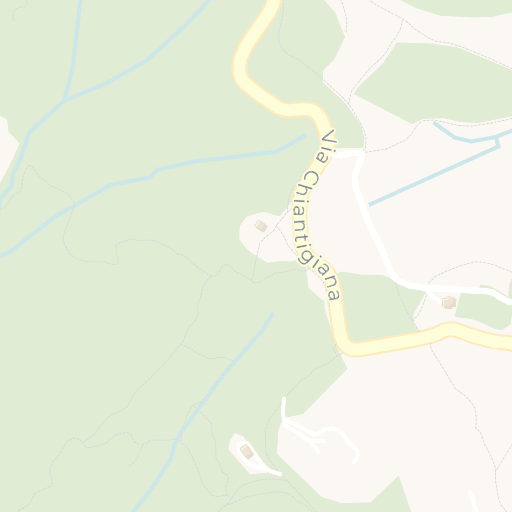
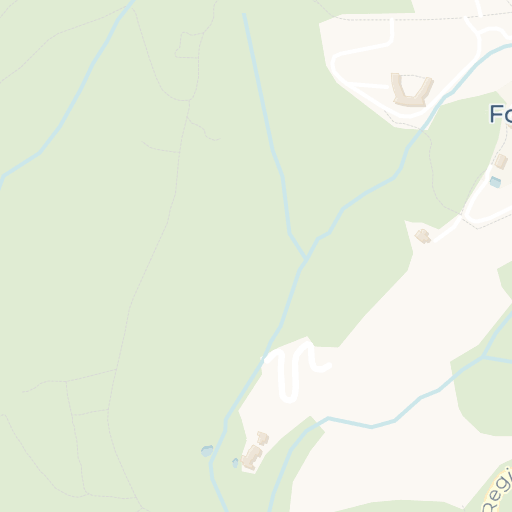
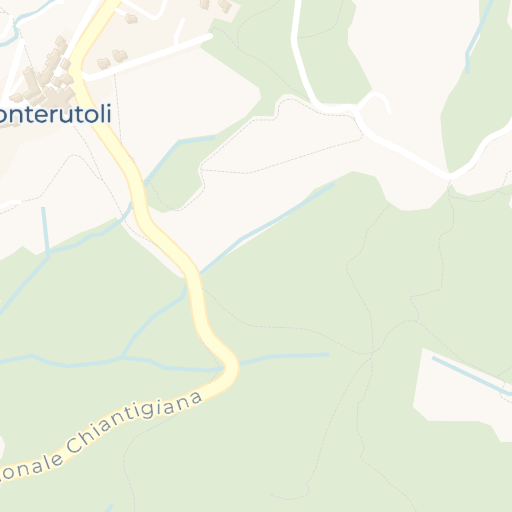
Getting here. Fonterutoli is on the SR 222 Chiantigiana a little beyond Castellina in the direction of Siena. For Castellina itself the published directions are the Firenze–Siena link road to the San Donato exit from the north, and the SR 222 from Siena.
Nearby, and free. The necropoli del Poggino, in a grove in this locality, can be visited freely.
Verified against Marchesi Mazzei -- Castello di Fonterutoli, October 2026.
When to visit
Book before you travel, in any season. Everything the estate offers inside the cellar is a booked visit with a fixed duration — 75 minutes to 1 hour 45 — so this is a fixed point in a day, not a stop.
Harvest is the most interesting and the least convenient time. The grapes of 114 parcels are picked by hand and vinified separately; late August into October is when the cellar is actually doing the thing it was designed to do, and also when the estate is busiest.
Come for the view on a clear day. The panorama from Fonterutoli takes in Siena and the Sienese Valdelsa. Haze removes the reason the hamlet is where it is.
Pair it with the wood. The Poggino tombs are here, unlit and free, and want dry ground and daylight — which argues for a morning at the tombs and an afternoon in the cellar.