

Murano
Last updated on November 15, 2026Murano is a cluster of seven small islands linked by bridges in the northern lagoon, about ten minutes by vaporetto from Venice, and has been the centre of Venetian glassmaking for over seven hundred years.
The industry moved here by decree in 1291. The official reason was fire: glass furnaces burned continuously, and Venice was built largely of timber. The effect, whether or not it was the intent, was to concentrate every glassmaker in the Republic on one controllable island, where techniques could be guarded and workers were forbidden to leave.
The Museo del Vetro, in the 17th-century Palazzo Giustinian, sets out that history from Roman glass onward and is the most useful first stop for making sense of what the workshops along the canals are actually doing.
The other major building is Santi Maria e Donato, a Veneto-Byzantine basilica whose fabric spans the 7th to 12th centuries. Its mosaic floor of 1141, patterned with animals and geometry, is among the finest in the lagoon, and behind the altar hang four large bones traditionally described as a dragon's -- in fact almost certainly whale ribs, presented as relics of St Donatus.
Challenge to visitors
The demonstrations are sales rooms. Free glassblowing shows exist to put you in a showroom afterwards, and the pressure at the end is the business model rather than an accident of it.
"Murano glass" on sale is not always made on Murano. The name is the draw and the island is small; what is sold along the canal is not uniformly what the island makes.
And the boat is the cost. Nothing on Murano charges to walk around it — the €9.50 crossing is the admission, and at 75 minutes' validity a single ticket does not cover a return.
Visiting tips and strategy
When to go
Murano can be visited comfortably as a half-day trip from Venice at almost any time of year. Mornings tend to be quieter, before day-trippers arriving on organized glass-factory tours build up through midday.
Getting the good version
Buy a day pass if you are island-hopping. A single is €9.50 and valid 75 minutes — not enough for a return, let alone Murano and Burano. The 1-day travel card at €25.00 pays for itself on the third boat.
Start at the glass museum, not at a furnace. Seeing what the island made over seven centuries first turns the showrooms from sales floors into something you can judge.
Walk away from the main canal. The vaporetto stops and the showrooms cluster together; the island is seven islands, and the quiet ones are two bridges away.
Ask where a piece was made before buying, and be comfortable with the answer.
What it costs
The island is free. The boat is not. There is no charge to land on Murano or walk it; what you pay for is the crossing.
€9.50 for a single — the "biglietto ordinario 75 minuti rete unica", valid 75 minutes from first validation across the waterbuses, buses, trams and People Mover. Note that 75 minutes does not cover a return trip.
Travel cards: €25.00 for one day, €35.00 for two, €45.00 for three, €65.00 for seven. For more than two crossings the day card is the cheaper ticket.
€1.50 for holders of the EU Disability Card and for wheelchair passengers, with companions travelling free.
Individual glass museums and workshops set their own charges; ACTV does not publish those.
Verified against Actv SpA (AVM, Venice public transport), November 2026.
Getting there and getting in
Getting there
By ACTV waterbus from Venice, about ten minutes. Actv SpA runs the network; the crossing is the only compulsory cost.
Fares
Single €9.50, valid 75 minutes from first validation — not enough for a return. Day cards €25.00 / €35.00 / €45.00 / €65.00 for 1, 2, 3 and 7 days.
Concessions
€1.50 with an EU Disability Card or in a wheelchair, companion free. Companions of blind and severely sight-impaired passengers holding the Provincial Tessera marked "with companion" also travel free.
On the island
Seven small islands joined by bridges. The glass museum occupies a seventeenth-century palace on the main canal. Furnaces and showrooms set their own hours and prices.
How long
Half a day, or a full day combined with Burano and Torcello on one travel card.
Verified against Actv SpA (AVM, Venice public transport), November 2026.
Place accessibility
The crossing is the part with published provision, and it is good. Wheelchair passengers and EU Disability Card holders pay €1.50 and their companion travels free; companions of blind and severely sight-impaired passengers travel free too.
The island is bridges. Murano is seven islands joined by them, so moving between its parts means crossing water — and a Venetian lagoon bridge is usually stepped.
The main canal is the level route, running past the landing stages and the showrooms without needing a crossing.
Not published, and not guessed: which landing stages are step-free, which bridges are ramped, or the access arrangements of individual furnaces and museums. ACTV publishes fares and concessions, not the terrain on the other side of the water.
Quick facts
- Type: Nature, Activity, Island
- Local name: Murano (vedi la pagina italiana)
- Visitor access: Open to visitors
Where it is

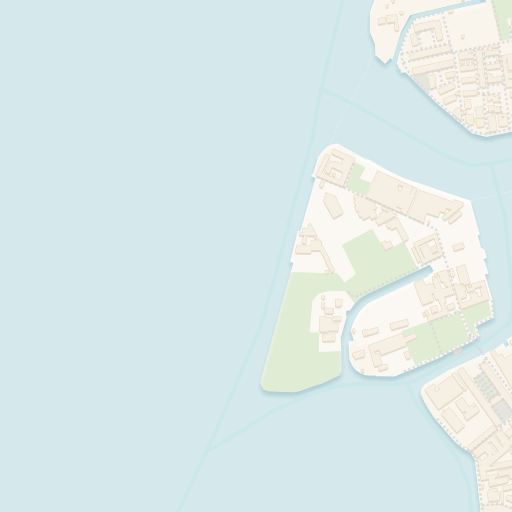
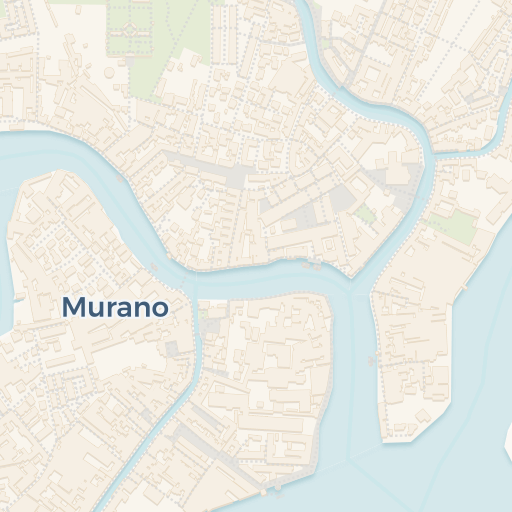
Get directions Open in Apple Maps
© OpenStreetMap contributors · © CARTO · 45.45846, 12.35297
Visit responsibly
Not everything sold as "Murano glass" around Venice is actually made on the island -- a significant share of cheaper souvenir glass is imported from elsewhere and sold under the same name. Buying directly from a workshop on Murano itself, ideally one that's willing to show its furnace, is the more reliable way to get the real thing.