

Sant’Erasmo
Last updated on September 10, 2026Overview
Sant'Erasmo is the largest island in the Venetian lagoon after Venice itself, and it is farmland. Around seven hundred people live here, and the island has for centuries been known as l'orto di Venezia -- the city's kitchen garden.
There is almost nothing to see in the museum sense. There is a nineteenth-century Austrian fort, a church, three boat stops and a great deal of open field, and that is the point: this is the lagoon without Venice on top of it.
What it is famous for is an artichoke. The violetto di Sant'Erasmo grows in salty soil found nowhere else, and its first cut of the season is a genuine local event.
Quick facts
- Type: Nature
- Local name: Sant’Erasmo (vedi la pagina italiana)
- Size: About 4 km²
- The garden of Venice: The island supplied the city’s vegetables for centuries, going to the Rialto by boat daily -- economic infrastructure rather than a picturesque sideline.
- An artichoke that grows in salt: The violetto di Sant’Erasmo takes its character from the island’s mildly saline soil; its first spring cut, the castraure, is sold for a few weeks only.
Visit responsibly
This is farmland where people work, not a park. Stay on the roads and public paths, and do not walk into fields or pick anything.
Buy from the island. The farm shops and the two or three trattorias are what keep cultivation viable here, and the artichoke's recovery happened because there was a market for it. This is the most direct thing a visitor can do.
The barene at the island's edges are fragile salt marsh and are eroding across the whole lagoon. Do not walk on them.
Take litter back with you; waste collection here is sized for seven hundred residents.
Sant'Erasmo absorbs very few visitors and has no infrastructure for crowds. Coming in small numbers, quietly, is what keeps it as it is.
Where it is




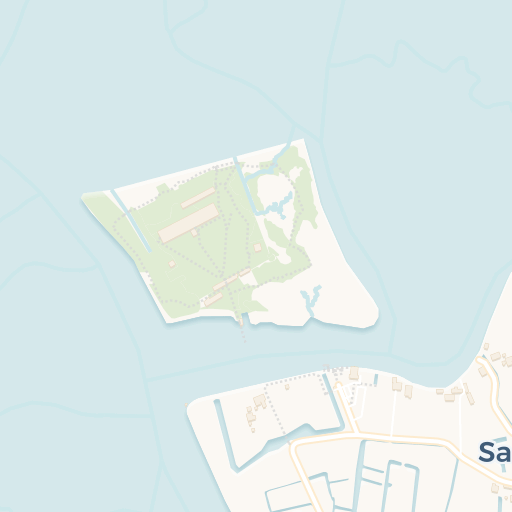
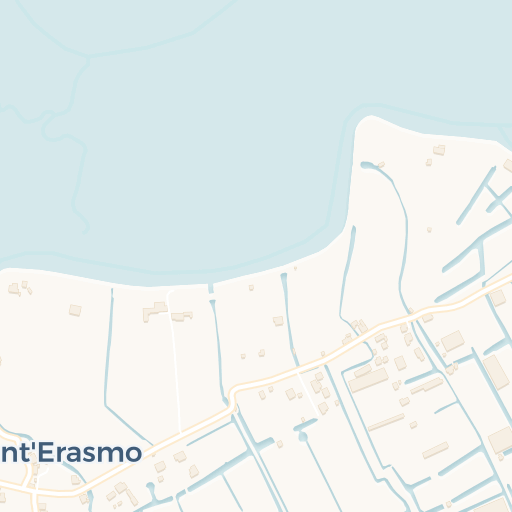
Get directions Open in Apple Maps
© OpenStreetMap contributors · © CARTO · 45.4592, 12.3839
Plan your visit
Sant'Erasmo is reached by vaporetto line 13 from Fondamente Nove, roughly forty-five minutes, with three stops on the island: Capannone, Chiesa and Punta Vela.
There is no admission and nothing ticketed -- the island is simply a place people live and farm.
Bring a bicycle or hire one; the island is flat and several kilometres long, and walking between the stops takes a while. Bicycles travel free or cheaply on the vaporetto.
Facilities are minimal: a handful of trattorias and farm shops, no supermarket to speak of, and services that keep local rather than tourist hours. Bring water.
Allow half a day, including the boat each way. Combining it with Burano or Torcello on the same line is easy.
When to visit
Late April and May are the island at its best -- the artichoke harvest, the castraure on sale, and the festival at the Torre Massimiliana.
Spring and autumn generally are the pleasant seasons for cycling. There is very little shade anywhere.
Summer is hot and exposed, and the mosquitoes on the lagoon side are serious in the evening.
Winter is bare and often foggy, and much is closed -- though the lagoon in winter fog is memorable if that appeals.
Any season, go on a weekday: this is a working island, and the point of it is that it is quiet.